By the early 12th century, the Fitz Stephen family, early ancestors of our Gooding family, was established in Gloucestershire. Thomas Fitz Stephen (?-1120) had at least two sons, one of which, Ralph Fitz Stephen (?-?) lived in Wapley, in the south of the county and may have been a royal chamberlain. He also had at least two sons: Ralph Fitz Stephen (?-1202), and William Fitz Stephen (1124-1191).
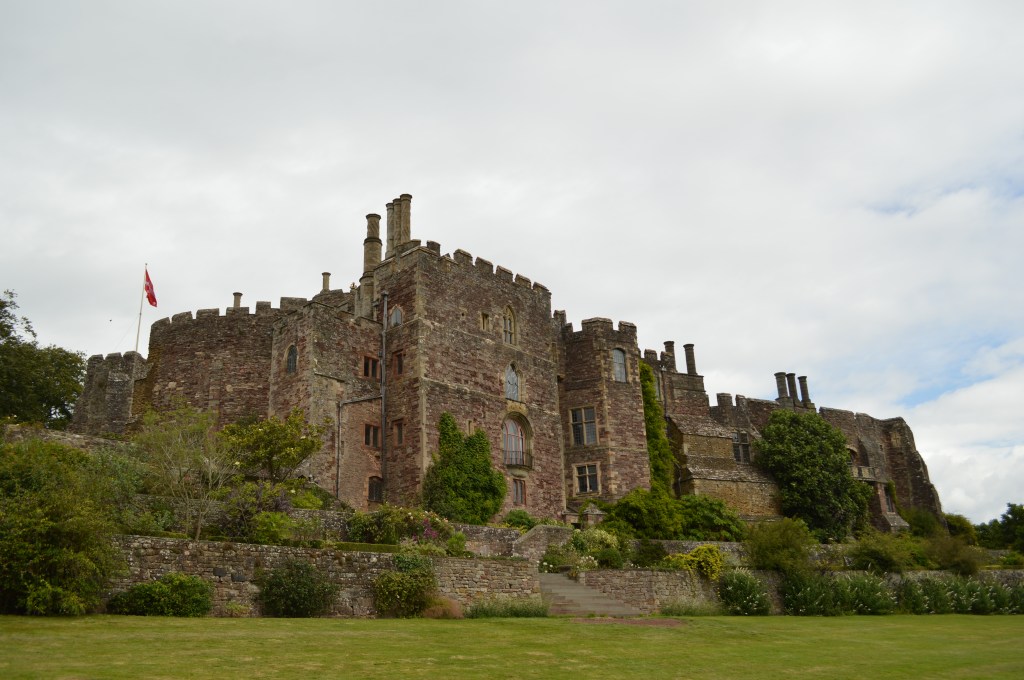
The younger Ralph Fitz Stephen (?-1202) was probably born in the 1120s. He was my 26 x great grandfather and married into the de Berkeley family of Berkeley Castle, Gloucestershire, and later, Maud or Matilda de Calz. Unfortunately we do not know the name of my 26 x great grandmother for certain.
Berkeley Castle, Gloucestershire, 2016
The brothers Ralph and William were highly thought of by king Henry II. During the 1170s, they each held the position of High Sheriff of Gloucestershire, effectively the king’s representatives in the county, and of very high status. Ralph held this post from 1171 – 1175. In addition, he was the treasurer of the Abbey of Malmesbury, built in 1180, and was created baron of both Wapley and Winterbourne by Henry II. He also had land in Sherwood Forest, through his second wife, and seems to have been a benefactor of several abbeys around England. He would have been extremely wealthy. When the king died in 1189, Ralph was named in his will.
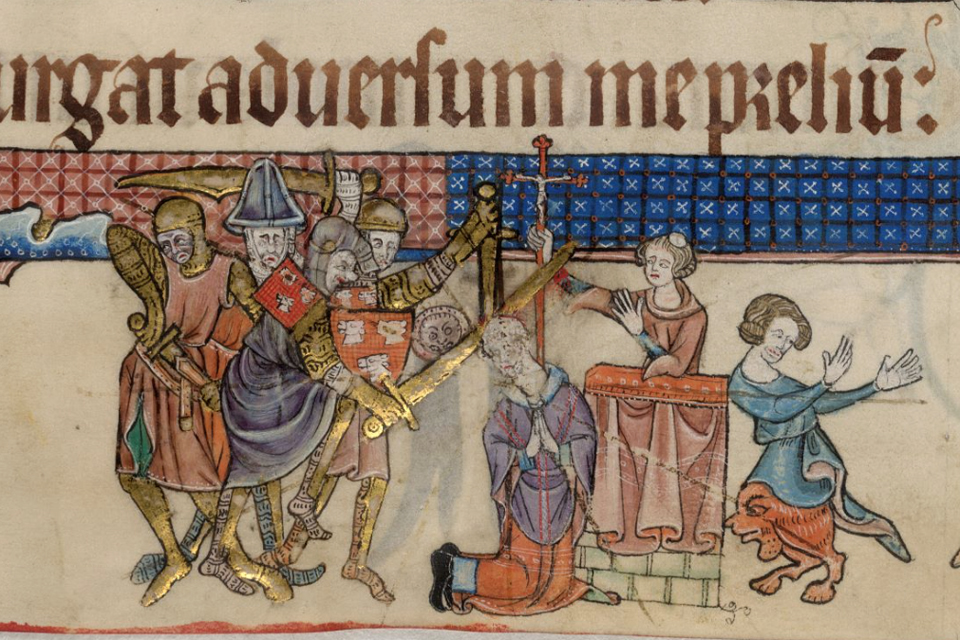
However, Ralph’s brother William Fitz Stephen (1124-1191) achieved the greater fame. He is considered by many to be the same William that secured a role as personal household clerk to Thomas Becket while he was Chancellor, and rose in prominence within the English church as his master did, becoming a subdeacon to Becket who was by then Archbishop of Canterbury. He was also a legal expert. William’s relationship with king Henry II meant that he was able to secure a pardon for himself when Becket was sent into exile for 6 years. William remained close to Becket however and spent time with him in France during the latter’s exile. Both men were restored to their positions, though Becket later angered the king again; William was an eye witness to the arrest attempt that led to the Archbishop’s murder in Canterbury Cathedral in 1170.
William was a literary man. His own pardon from Henry II had been secured by way of a long poem written in Latin. He is however most well known for writing a hugely important biography of his former master, the “Vita Sancti Thomae” or Life of St Thomas (1173/4), which describes Becket’s assassination in great detail. One historian, WH Hutton, said of William, “No biographer tells us more certainly what really happened and how it happened…”
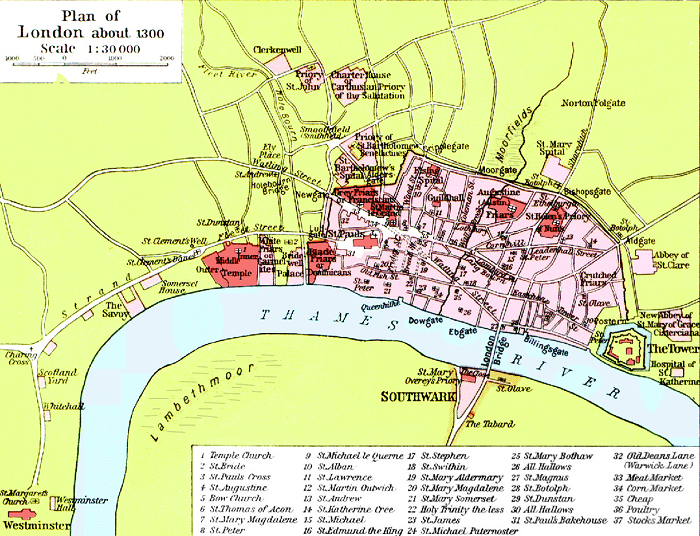
The preface of this book is famous in its own right due to its detailed and evocative description of twelfth century London and the lifestyle of its inhabitants.
Following Thomas Becket’s death, it appears that William returned to Gloucestershire where he worked with his brother, then Sheriff of Gloucestershire, before taking on the role himself in 1175. He appears to have served until 1190, whilst also acting as an itinerant justice across several counties under king Richard I (the Lionheart). He probably died around this time.
Ralph meanwhile married and had at least two sons, one of which, Fitz Ralph Fitz Stephens (?-?), our ancestor, took part in the Crusades to the Holy Land under Richard the Lionheart. Little is known about the next few generations of the family, though they remained in Gloucestershire and retained the baronetcy of Winterbourne. The “Fitz” part of the name was dropped in the fourteenth century, with John Stephens (?-?), my 20 x great grandfather. His grandson, another John Stephens (?-?), served as Mayor of Bristol in 1403, having previously been Member of Parliament for Bristol. John’s grandson, Thomas Stephens (?-?) (my 16 x great grandfather), was also an MP, serving at various points during the first half of the fifteenth century, including at the time of the capture of Joan of Arc. His son, and our ancestor, John Stephens (1459-1500), was involved in the War of the Roses and served as MP for Bristol under the new Tudor king, Henry VII.
Sources
Some Descendants of the Fitz Stephen Family in England and New England, Charles Ellis Stephens, 1905
Oxford Dictionary of National Biography
A New History of Gloucestershire, Samuel Rudder, 1779
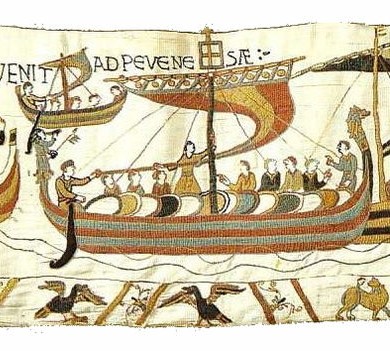
William the Conqueror’s ship, the “Mora” shown on the Bayeaux Tapestry. Airard Fitz Stephen is thought to be on the far left.
It has taken me many years to find anyone famous within our family history, but research into our Stephens ancestors from Gloucestershire led to the discovery of a noble line dating back to Norman times.
Airard Fitz Stephen (or Stephen Fitz Airard), my 29 x Great Grandfather is thought to have been born around 1036 and may have been from the famous French de Blois family though this has not been confirmed. The use of “Fitz” did not denote royalty, as it was later used in England, but probably meant “son of”. Airard was definitely a nobleman however, and was a key part of the Norman invasion of England.
Edward the Confessor had designated his cousin Duke William of Normandy as heir to the throne of England but on his death, in January 1066, the throne was seized by the Saxon Harold Godwinson. William assembled a fleet of over 1000 ships and set sail for England. The largest and fastest of William’s fleet, and the first to arrive on English shores, was the warship named the Mora, captained and steered by no other than Airard. Including William and Airard, the ship probably carried around 10 Norman knights plus their entourages and equipment. The ship successfully landed at Pevensey, East Sussex, on 28 September 1066, and the invasion began. Airard remained in England where he was part of the Norman army that fought and won at the Battle of Hastings on 14 October 1066.
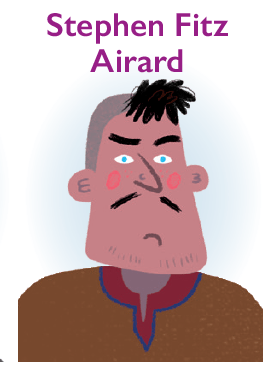
Taken from English Heritage’s Battle of Hastings “Who’s Who” game. Probably not a contemporary likeness.
We know little more about Airard’s career, but he was well thought of by William, and remained loyal to him. The now King William I gave Airard lands in Hampshire, Berkshire and Warwickshire in recognition of his efforts, it is likely that land in Gloucestershire also formed part of his reward. He remained captain of the Mora until William died in 1087, but we do not know when Airard himself died, or where he was buried as he would have spent time in both France and England.
Airard was already married before the Norman Conquest, and had at least one child, a son called Thomas (? – 1120), my 28 x great grandfather.
By 1120, William I’s youngest son Henry I was on the throne of England and the Fitz Stephen family continued to move in royal circles. Airard had owned another, brand new, ship called la Blanche-Nef or the White Ship which his son had just refitted. This ship was docked at Barfleur, Normandy and Thomas offered it to the King to use for his return to England following a time of battle with Louis VI of France.
Thomas is said to have approached the king with the words: “Stephen, my father, served yours all his life by sea, and he it was who steered the ship in which your father sailed for the conquest of England. Sire king, I beg you to grant me the same office in fief: I have a vessel called the Blanche-Nef, well equipped and manned with fifty skilful mariners.”1
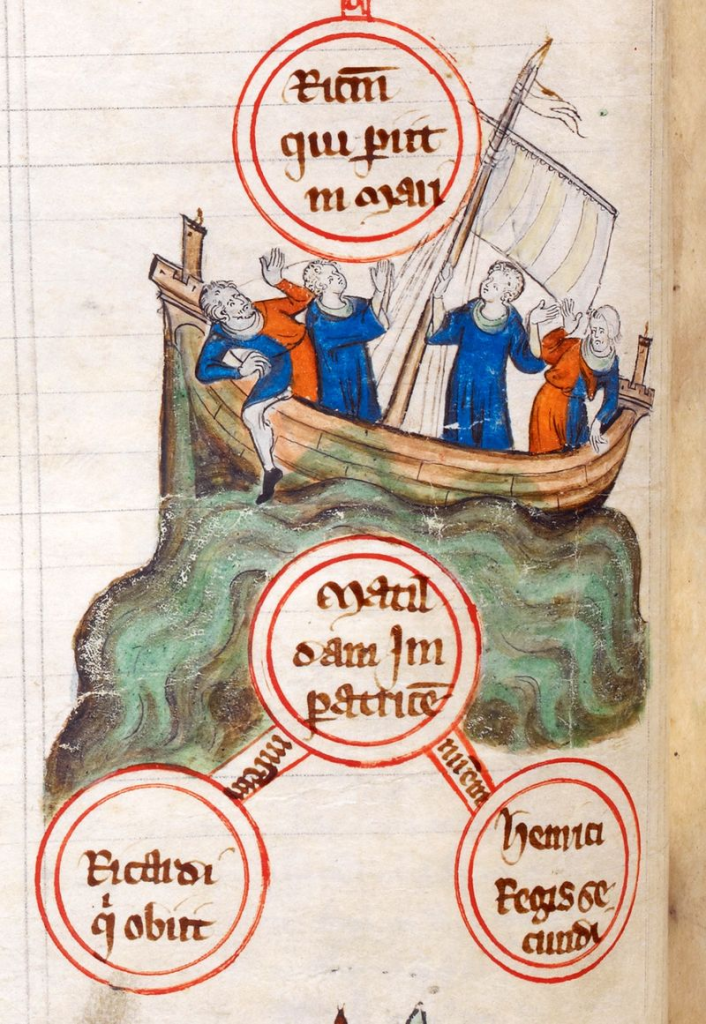
Although Henry made other arrangements for himself, he agreed that his sons would travel with Thomas, and in total around 300 people were on the ship when it set sail on the evening of 25 November 1120, including many other members of leading Norman families. Accounts of the events state that those onboard had been drinking excessively, the wine supplied by William Adelin, the only legitimate heir to the throne. The passengers urged Thomas to try and overtake the King’s ship, but in doing so, the Blanche-Nef hit a rock in the dark and capsized. William Adelin drowned while trying unsuccessfully to save his half-sister Matilda, and his half-brother Richard also died. In 1880, the poet Dante Gabriel Rosetti told the story of the tragedy from the perspective of a butcher who survived the shipwreck, noting:
“…we looked and knew Fitz Stephen there. He clung, and “What of the Prince?” quoth he. “Lost, lost!” we cried. He cried “Woe on me!” And loosed his hold and sank through the sea.”
According to Berold, the butcher, Thomas’s last words were “then it is terrible for me to live”. The ship was lost only half a mile off the French coast where it remained, however experts now believe they have found it following a diving expedition in the summer of 2021.
Berold was the only survivor of the white ship and the events led to a succession crisis for England’s monarchy. Airard and Thomas Fitz Stephen each changed the course of English history.
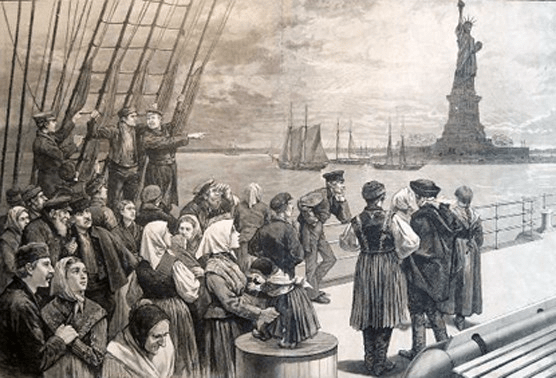
An illustration of immigrants on the steerage deck of an ocean steamer passing the Statue of Liberty from Frank Leslie’s Illustrated Newspaper, July 2, 1887. National Park Service, Statue of Liberty NM
My grandmother’s great grandmother was Eliza Sarah Ann Wren (1842-1903). Like many of my grandmother’s family, she came from a long established Kentish family, with more recent generations working as carpenters at the Chatham dockyard. Eliza was the eldest of seven children born to William Wren (1818-1900) and Eliza Lucy Rudland (1816 -1865) in Chatham. Here I am going to focus on three of Eliza’s younger siblings, who all took the decision to leave not only Chatham, but Great Britain, in search of a better life.
The second half of the nineteenth century saw a huge increase in emigration as steam ships made travel cheaper and quicker. Opportunities were even advertised in Britain, as America, Canada and Australia sought farmers and skilled labourers to add to their populations. Wages were higher than in Britain and the idea of new beginnings, more money and space was hugely attractive to many.
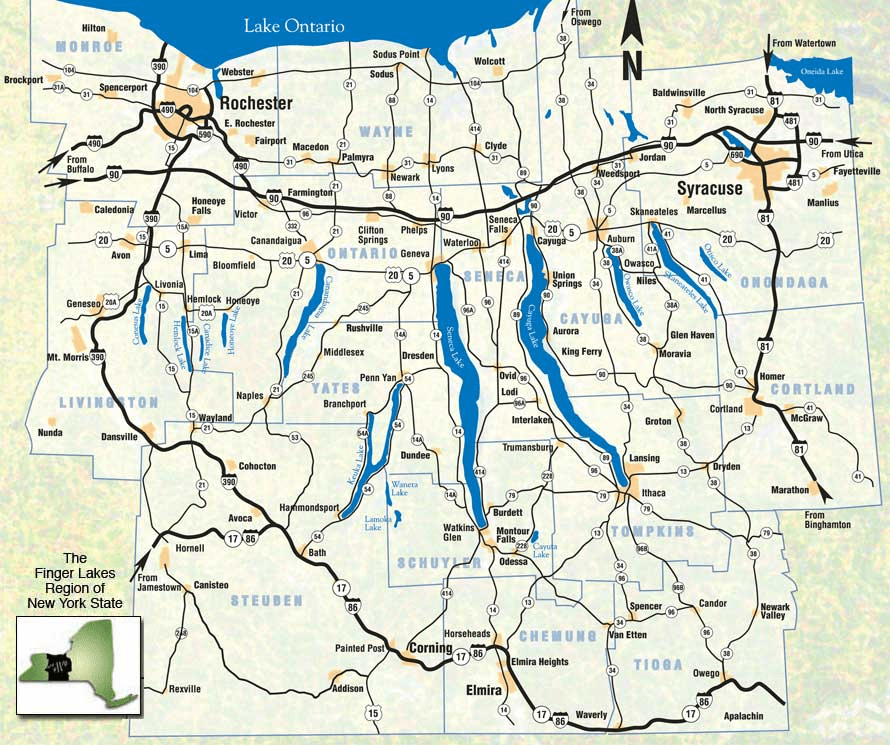
In 1871, Eliza’s sister, Elizabeth Emily Wren emigrated to New York state with her husband Richard Cordingly. Richard had been working as a grocer in Chatham and the couple had lived above the Cordingly family shop. US Census records show that Elizabeth and Richard settled in the Finger Lakes region of New York State, specifically Milo, Yates County, and adopted a daughter, Susie, who was American by birth. Richard initially found work as a labourer, later becoming a fruit grower – the region is known for its wine. The couple became naturalised as US citizens in 1880 and remained in the same home on State Road, Milo for many years, eventually sharing the house with Susie’s own family.
Reports back to England must have been positive, as Elizabeth and Richard were joined in the 1880s by two of Elizabeth’s brothers, Harry and Alfred. Richard later paid for his nephew, Albert Cordingly, to come to America, which he did in 1906. Albert actually married Elizabeth and Richard’s daughter Susie the following year although the marriage eventually ended in divorce.
The 1880s were a peak period of emigration to the USA from Britain. Henry Wren (1852 – 1932), known as Harry, probably travelled to New York in 1882. He worked on Richard’s fruit farm, and lived with his sister from when he arrived until his death at the age of 79. Harry never married and I haven’t been able to find out much about him.
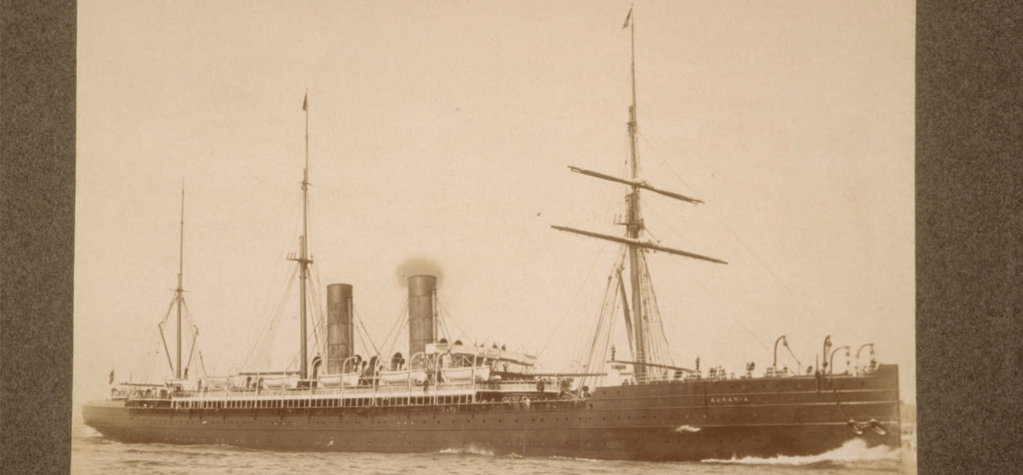
The “Aurania” that Alfred and his family sailed on to America
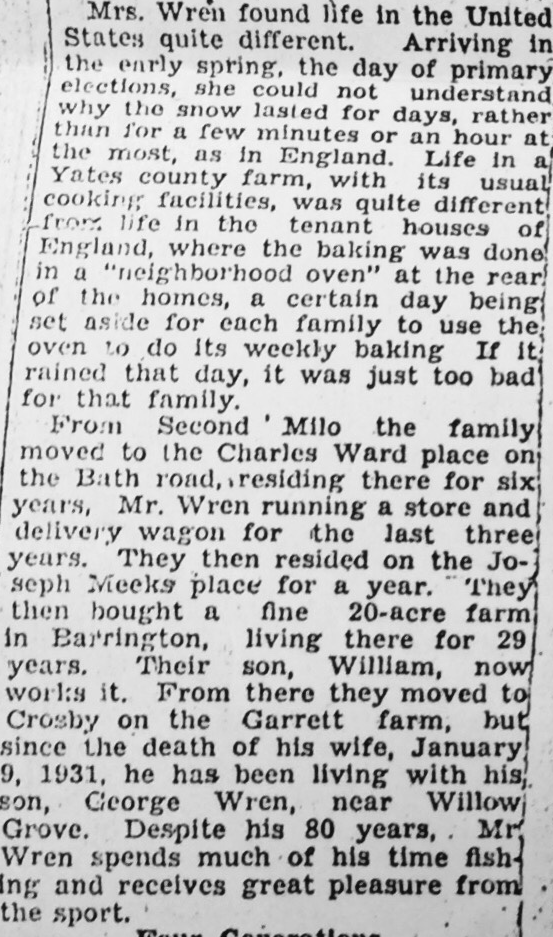
Much more information is available about the youngest of the seven siblings, Alfred Charles Wren (1856 – 1938). Alfred, his wife Emma and their four children left Liverpool in 1885 or 1886, arriving in New York after an arduous ten-day journey that saw the ship blown off course. Their youngest child, Arthur, was only around 10 months old and Emma may even have been pregnant again, as their daughter, Elizabeth Emma was born around 1886 in New York State. Three more children were to follow. The family lived with Elizabeth and Richard for six weeks before finding their own home in Penn Yan, Milo. A local newspaper report marking Alfred’s 80th birthday some years later includes Emma’s own recollections of arriving in the USA and how life in England had been before.
Extract from local newspaper article marking Alfred Wren’s 80th birthday, May 1936
While in England, Alfred and Emma had lived at Rope Walk in Chatham, where Alfred worked as a labourer, probably at the shipyard. Alfred seems to have found work as a labourer straight away in America; he worked at Charles Ward farm on the Bath Road, and later ran a grocery store and delivery wagon as well. Alfred and Emma became US citizens in 1895.
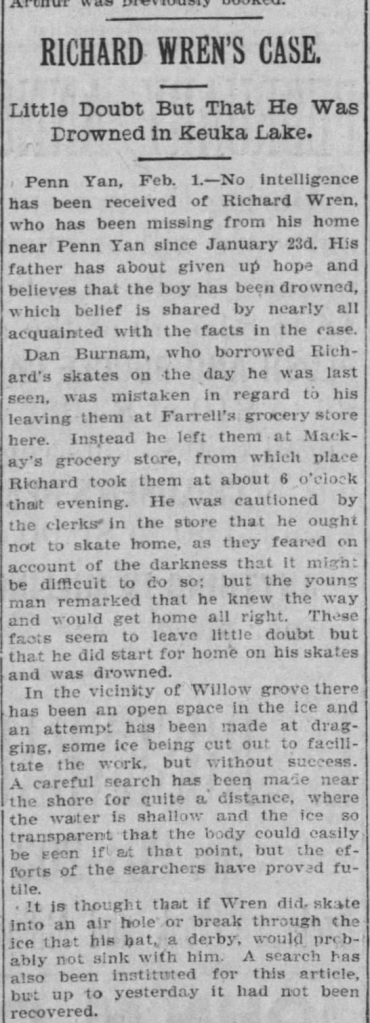
Four years later, tragedy struck the family. Local newspapers report how Alfred and Emma’s second son, Richard, failed to return home after skating on nearby Keuka Lake one winter’s afternoon in January 1899. He had just turned 18 years old. There was speculation that he may have run away to join the army but this seemed completely out of character. The more likely explanation was that he had skated into a hole in the ice near Willow Grove. Sadly his body was never found.
Elmira Star-Gazette, Wednesday 1 February 1899
By 1905, Alfred had moved his family away from Lake Keuka to Barrington, south of Penn Yan, where he bought a 20-acre farm. Perhaps the location was chosen purely due to the opportunity it offered, but it may have been that a completely fresh start was needed for the family. Alfred and Emma remained there for 29 years before briefly moving to Crosby, back on the Lake. Emma died shortly afterwards, in 1931, and Alfred moved to Willow Grove where he lived with his son George until his death in 1938.
Alfred and Emma’s remaining children remained in New York State. Their son William went on to become Supervisor of Roads in Barrington before moving to nearby Dundee, Walter James became a grape grower, Arthur was a boat builder at Penn Yan Boats, George was Police Chief at Penn Yan and Fred was a Cabinet Maker. Although many of the female Wrens were based at home, Ethel moved to Ithaca and worked for Ithaca Leather Goods Co for over 20 years. She was fully part of the community and her thanksgiving dinner in 1917 even got a mention in the society pages of the local newspaper.
Although it has been reported that up to 40% of British emigrants may have eventually returned back to their home country, all of the Wren and Cordingly arrivals settled in New York State permanently, and their descendants remain in the United States to this day.
‘The River Thames with St. Paul’s on Lord Mayor’s Day, 1752’ by Canaletto (from the Web Gallery of Art)
My research into my grandmother’s ancestry has led to the discovery of a number of Thames watermen who plied their trade between the mid-seventeeth and early nineteenth centuries. All of them were ancestors of my grandmother’s great-great grandmother, Eliza Lucy Rudland (1816-1865) who was from a long line of Kentish families. I have been able to confirm 24 watermen individuals so far, but it is likely that there were many more as it was normal for generations of men and boys to be employed in the same profession.
The river Thames has always been a key highway in London, with people and goods travelling along and across it. Until the early eighteenth century, London Bridge was the only crossing so boats were vital. Watermen operated wherries, barges and ferries to transport passengers on the river, and would gather at the various steps along the Thames waiting to be hired. They were the taxi drivers of their day. Watermen were generally considered to be “rough and ready”, known for their coarse language. Crime, overcharging and overcrowding of vessels were issues, so, in 1555, an Act was introduced to regulate watermen activities and introduced apprenticeships for boys from age 14, who thereafter became members of The Company of Watermen and Lightermen of the River Thames.
Life for watermen could be tough. While some were reasonably well off and could afford their own vessels, many were poor and struggled to make ends meet. Most would need to tout for business though some may be lucky enough to secure regular work from a wealthy gentleman or merchant. In Putney, watermen set up their own charity to support poor families, including the widows of watermen who had died in the Thames or at sea – for some this was a natural next step, though press gangs were also a risk. It is perhaps not surprising that the waterman strongly contested proposals to build a new bridge across the Thames, a direct threat to business, though they were ultimately unsuccessful.
Our watermen ancestry mainly consists of 3 large families in the south-west London area, who intermarried. The Bemish (or Beamish), Sears and Meredith families all appear frequently as court attendees in the court rolls for Wimbledon in the seventeenth century, so it is likely that they were tenants of the local manorial lands. I have traced the Bemish family back to a gardener, William, who lived in Mortlake and was my 9 x great grandfather. In 1708, William Bemish (-1756) married Anne Sears (1688 – 1747) from a Putney family. Anne’s grandfather (my 11 x great grandfather) was Michael Sears ( – 1717) who was a waterman, as was her father John Sears (1662-1729), and two of her brothers – another Michael and another John, both of whom were apprenticed to learn the trade from their father.
William and Anne had eleven children, of which four sons definitely became watermen. The eldest, Richard Bemish, was apprenticed to his uncle John Sears but it appears that he died soon after. Although the circumstances are not known, drowning was a risk for watermen. John Sears also trained up two more of his nephews, William Bemish (1714-1783), my 8x great grandfather, and Thomas. Another Bemish brother, Charles, also became a waterman, as did his son.
The earliest waterman I have found was a 10x great grandfather, Samuel Meredith (1638-1704) who lived and worked in Mortlake, now the site of the finish line for the Oxford and Cambridge boat race. Samuel and his wife Martha Ludgall (1641-1712) had eight children, at least two of whom became watermen. The older son, James Meredith (1665-1716) appears to have obtained a higher social status, becoming a Royal Waterman under King William III and named in the Establishment List for the Royal Household in 1688-9. James would have been responsible for rowing and maintaining the Royal Barge and transporting the King and his family along the river; very different to the daily work of the rest of our watermen relatives!
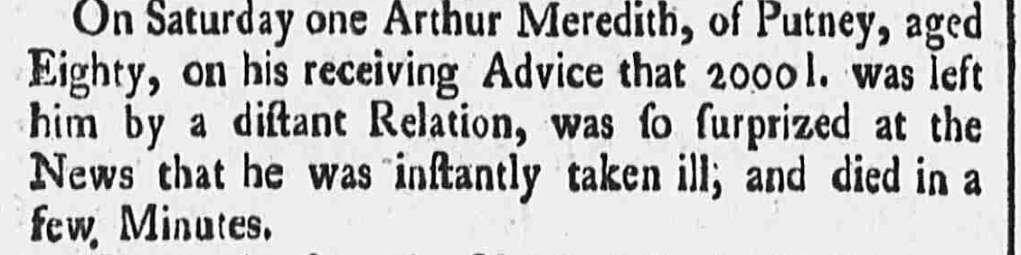
James’ younger brother, Arthur Meredith (1676 – 1754), my 9x great grandfather,was apprenticed to his father Samuel in Mortlake at the age of 15. He married Margaret Calverley (1683 – 1738) and the couple had eight children, moving to Putney at some point between 1716 and 1720. Arthur seems to have been of good standing in his community, he is recorded as Head of a Tithing (sub division of a parish) in Putney in 1739, giving him responsibility for maintaining law and order. The family were not wealthy though and we know that Arthur borrowed money from his father-in-law Matthew Calverley (1645-1728) who refused to leave anything additional to his daughter’s family in his will. This may explain Arthur’s reaction to a more generous benefactor, which ultimately led to him achieving fame in death, reported in at least six newspapers around the country:
Derby Mercury, 13 September 1754
Sadly, I have not yet been able to identify Arthur’s distant relation but will keep searching!
One of Arthur’s sons, another Arthur, became a mariner – working as part of a crew of a vessel. He was serving on HMS Worcester when he died in 1743. A daughter, Mary, married John Henshall who was a lighterman working in Westminster; lightermen carried goods rather than passengers. We are descended from Arthur’s fifth child, Martha Meredith (1716 – 1775) who, in 1737, married William Bemish (1714-1783).
William and Martha remained in Putney, where they raised eight children. All five of their sons became apprentice watermen, four of them trained by William himself. Unfortunately I have not been able to trace all of them into adulthood, despite one of them having the distinctive name of Thomas Christmas Bemish (we can guess when his birthday was)! William did have at least one grandson, John, who followed the previous five generations into the profession.
There is also another branch of watermen within my grandmother’s ancestry who appear to be separate from the Bemish, Sears and Meredith families. Thomas Wilson (?1734 – 1804) lived in Greenwich, where he was a collegeman, using a type of flat-bottomed barge. At least two of his three sons followed in his footsteps, and his son James was apprenticed to him in 1791. The Wilson family would have been directly impacted by the development of docks in Greenwich, which led to rivalry between local ferries and fears that lightermen would lose business.
Although the dock developments and the building of multiple bridges across the Thames have vastly reduced the number of watermen working on the river, the profession and guild still exist and apprentices are still trained to operate vessels safely on the river.
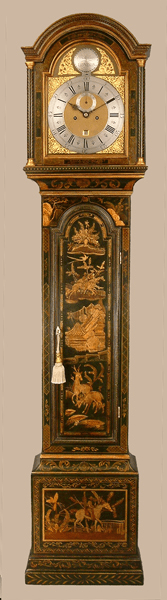
Photo Credit: Allan Smith Antique Clocks, 11 September 2021
It isn’t often that I have been able to find physical items belonging to my ancestors; even gravestones have proved elusive! However, there are several items in existence which were handcrafted by my 8 x great grandfather, George Hobart (1692 – ?), who worked as a clock and watchmaker in London in the first half of the eighteenth century.
George’s family has been difficult to trace, partly due to the variations of spelling (Hubert, Hubbard to name a couple), but we know that he was the son of another George, a Gentleman who lived at least part of his life in the Aldgate area of London. George junior was apprenticed in July 1707 to Jonathan Rant, a well-known clockmaker in the city. George would have been around 14 years old when he started his apprenticeship, and became “free” on 2nd September 1717, ten years later. Completion of the apprenticeship meant that George became a Freeman (citizen) of the City of London, as he was inaugurated into the Worshipful Company of Clockmakers. Only two weeks later, George took on his own apprentice, himself the son of a clockmaker, suggesting that George’s work was respected.
At some point during his own apprenticeship, George had married Elizabeth, and the couple started a family. Three of their nine children were born during George’s training period. The family initially lived in Wapping, before moving to Clerkenwell, the centre of watchmaking in London. The late seventeenth century had seen an influx of skilled French watchmakers who were escaping Huguenot persecution; perhaps the Hobart (Hubert?) family even had its origins in France.
Watchmaking was a profession with close links to other metal work, i.e. blacksmithing and silver and goldsmithing. Apprentices learned to file and shape hard wood before moving on to work with metal. The watchmaker would have used a lens to undertake finely-detailed work, working on mechanisms for many hours. An 1881 publication, The Watchmakers’ Handbook, listed eye strain, conjunctivitis and irritability as some of the health hazards of the profession.
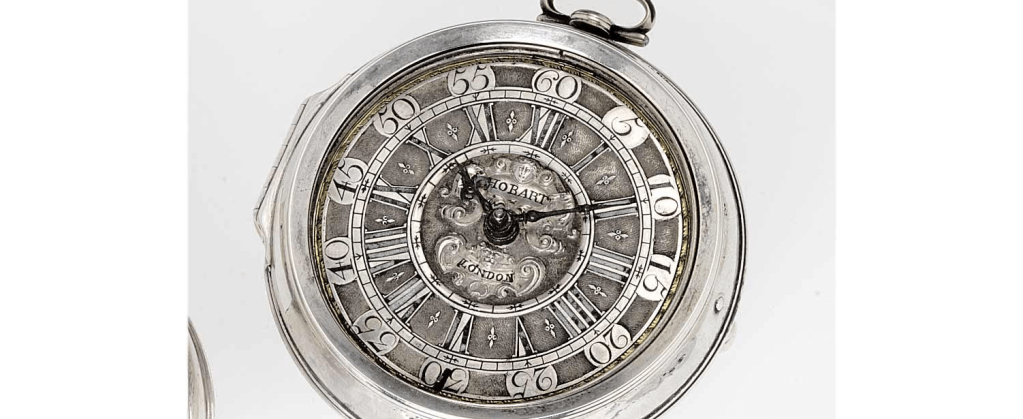
George’s work ranged from small pocket-watches to large clocks that would have graced eighteenth-century parlours. In 2008, this silver pocket-watch was sold by the Bonham’s auction house for just over £2,000. The watch dates from around 1720, relatively early in George’s career.
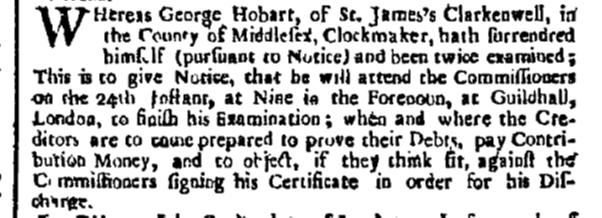
Unfortunately, despite the quality of his work, money was tight for the Hobarts, and there were many mouths to feed. A newspaper article published in September 1722 shows that George was threatened with bankruptcy and was being chased for payment by a number of people.
The London Gazette, issue 6092 issue 2 4 September 1722
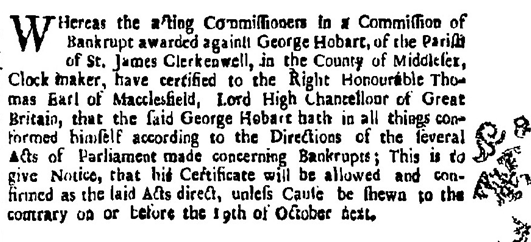
On this occasion, George was able to raise the money and another article later that month confirmed that his certificate of discharge from bankruptcy had been approved, freeing him from restrictions.
The London Gazette, 25 September 1722
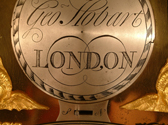
George continued to work. To make clocks, he would have worked in collaboration with a cabinet maker, though only his name would have appeared on the finished piece. A beautiful example of a longcase clock made by George around 1730 is currently for sale, if anyone would like to own a genuine piece of family history!
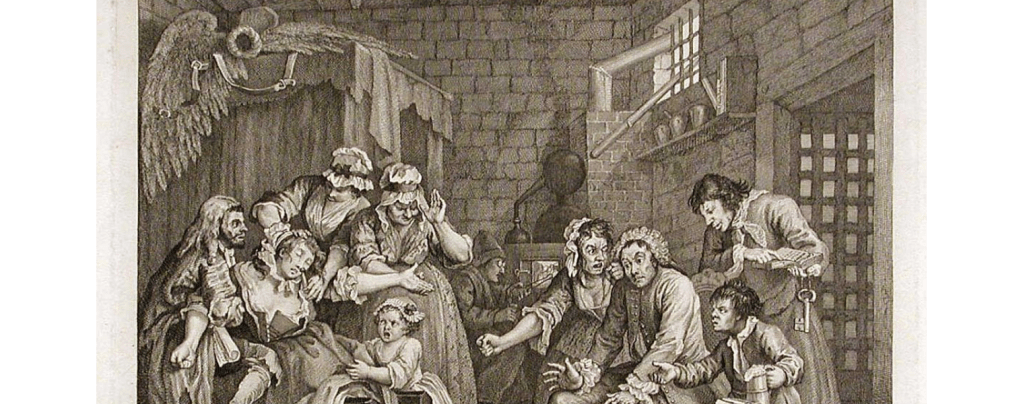
The family moved to the east end of London but sadly, George’s money struggles continued and worsened. By 1737 his creditors had caught up with him, and he was bankrupt and in the infamous Fleet debtors’ prison. The Fleet was situated off Farringdon Street in London and dated back centuries, though was by this time only used for debtors, who paid an entrance fee and ongoing rent for being there. The prison was notorious for the corruption of the gaolers working there who would extort as much money as possible from the prisoners, demanding high rents and mistreating and even torturing the individuals in their care. The prisoners did however have more freedom than in a normal prison, and records remain of debtors playing games whilst enjoying a beer, as they would have done in a public house. Prisoners were in the Fleet indefinitely though, as they needed to be able to pay off their debts before they could be released. William Hogarth immortalised the prison as part of his “A Rake’s Progess” series, where the main character himself fell into debt and was imprisoned.
This blog ends with a cliff hanger I’m afraid, as I will need to visit the National Archives at Kew and view the prison records in person to find out what happened to George next! I like to think that he was somehow able to get out of debt and return to his family, but this may not have been the case. His family is also a bit of a mystery as I have struggled to find death records for George’s wife or children. Did any of them leave London? We do know that one of George’s sons, Gabriel, also worked as a clockmaker, but he did not undertake an apprenticeship and there do not appear to be any records of any pieces bearing his name. Perhaps he worked alongside his father. George’s seventh child, my 7 x great grandfather, Ignatius Hobart (1721-?) lived in London but his son George Hobart (1746 – ?) moved to Kent where the family remained, eventually marrying into the Overy family two generations later. I will continue to chip away at the many “brick walls” I have come up against with the Hobart family and will update as and when I find out more!
Sources
Adele Emm, Tracing Your Trade and Craftsman Ancestors (Pen & Sword, 2015)
Claudius Saunier – The Watchmakers’ Handbook, 1881
The Lowdell family from Chatham, Kent, were the ancestors of my grandmother’s maternal grandmother, Mary Ann Lowdell (1863 – 1925). While researching this branch of the family, I struck gold, as several of our ancestors over four generations left detailed wills which tell us more about individuals, their lives and relationships.
The Lowdell (or Lowdwell / Loudwell) family story – as far as I have been able to trace it! – begins with two brothers, Robert Lowdell 1 (? – 1641) and John (? – 1653). It is almost certain that the family were in the north Kent area for several generations prior to this as the surname can be found in many parish and other documents from the fifteenth and sixteenth centuries. Robert, our ancestor (my 11 x great grandfather), was probably born in the 1570s, he married Catherine Cassingale (1577 – 1615) in Bredhurst in 1603. The parish register notes that Robert was living in Aylesford and Catherine in Lidsing at the time. The couple had a son, Stephen Lowdell 1 (1605 – 1658) in Hartlip before moving to Chatham. Sadly their daughter, Elizabeth, died at only a few days old and Catherine also died the same week – Robert buried his daughter and wife within two days of each other. Five months later, Robert married again, and went on to have another daughter and another son, Robert Lowdell 2 (1618-1684), with his new wife. Robert 1 died in 1641 and was buried at the church of St Mary, Chatham.
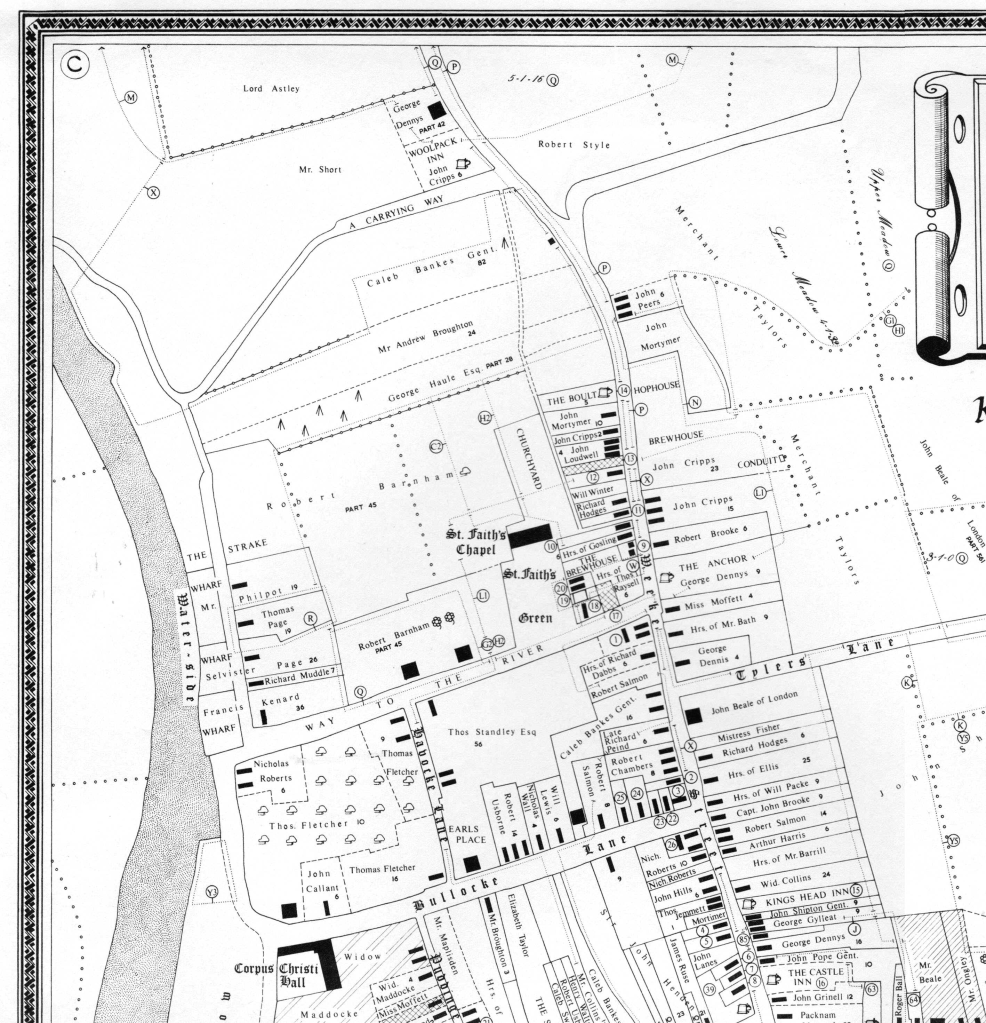
Unfortunately I have not been able to find a will for Robert 1, but his brother John’s will was very detailed and has helped piece together family details, particularly helpful for confirming relationships between Lowdell family members around the North Kent area. John lived in Maidstone and also married twice, sadly only one of his three children survived him. John’s will tells us that his occupation was a freemason (probably a mason working with “freestone” i.e. a grainless sandstone or limestone suitable for ornamental masonry1). He owned a mansion house with stables and gardens in Maidstone, as well as six other tenements (houses) with back gardens which adjoined it or were nearby, between Weeke Street and St Faith’s Green. A map showing Maidstone in 1650 clearly shows where John’s own house and two of the tenements were situated:
John left his estate to his wife and daughter, but asked his youngest nephew Robert 2 to act as guardian of his property and land, overseeing rents and ensuring that they did not fall into disrepair. Robert 2, a yeoman farmer living in Detling, was also to inherit the estate should John’s wife and daughter both die, but it would appear that this did not happen as Robert 2’s own will (1684) does not mention any land in Maidstone. I have been unable to trace John’s daughter Sarah any further but assume that she married and the land passed to her own children.
John’s will also tells us a bit about his standard of living. His wife Mary shared a bed chamber with their daughter Sarah, which John describes as “very well furnished”. He specifically bequeathed to Mary “one Feather bed, one Feather bed and bolster, one Feather pillow, Foure paire of sheetes, two pillow Coates, one Rugg and two blanketts and of the best Furniture”. A detailed inventory was to be taken of the rest of his belongings.
John also left some money to his older nephew Stephen Lowdell 1(1605 – 1658), and to his seven children – twelvepence (1 shilling) each. It is likely that John favoured Robert 2 because Stephen would have been the main beneficiary of his own father’s estate; there is no hint of any animosity in John’s will. Stephen 1 was a yeoman who at the time of his death, aged 53, in 1658, owned land in Chatham, Stockbury, Gillingham, Lidsing, Capstone, Ridley Hill and West Rainham. His property included a farm (in Gillingham), 15.5 tenements, a cottage, barns, stables, orchards, woodland and many acres of land. Some of Stephen’s land may have been inherited from his mother’s family as well. Although Stephen did have some debts – his land in Stockbury as well as some of that in Chatham and Gillingham would be sold to clear them – there was plenty left to pass on to his children.
Stephen 1, like his father and uncle, married twice. He had four daughters with his first wife, Susanna Long. In 1648, six years after Susanna’s death, Stephen married Elizabeth Gardiner (?-?) in London, and the couple had two more daughters and a son. Stephen 1 was careful to differentiate between the children of his two marriages, ensuring that his older daughters received household goods that he had owned before his remarriage. Stephen 1 left land to each of his daughters, but as was the norm, the main beneficiary of his will, after his wife, was his only son, Stephen Lowdell 2(? – 1696), who received his father’s home in Chatham, more than half of his land (mainly in Chatham and Lidsing) and specifically “the bedstead standing in the chamber over the parlour, one great chest in the same room & my great Bible”. Stephen 2 also inherited a dispute over some land in Ridley Hill (possibly near Sevenoaks) and was given instructions as to how to deal with it. Hearth tax records from 16642 show the widowed Elizabeth still in Chatham and taxed on three hearths at 2 shillings each. This was about the average number for a yeoman’s family.
Stephen Lowdell 2 (? – 1696) was also a yeoman, living on a farm in Chatham. He married Elizabeth Long (1652 – 1722) and the couple had four sons and three daughters. As well as the inheritance from his father, Stephen 2 inherited land in Chatham, Detling and Hartlip from his uncle, Robert 2 (1618 – 1684), who had been unmarried. Robert was not as wealthy, we know from Hearth Tax records in 1664 that he was taxed on the basis of only one hearth at his property in Detling. Robert 2 made provision in his will for his female servant, Mary Fryer, who was given all the profits from his property in Thurnham on the condition that she maintained it well. This was also to pass to Stephen 2 on Mary’s death – or sooner if she failed to look after it! Stephen 2 arranged for a large tomb to be erected for Robert 2 in Detling.
We know that Stephen 2 died of illness, probably in his forties. It would appear that something had gone wrong, or that he was not as shrewd as previous Lowdell generations had been as his brief will notes that “there are considerable debts”, as a result of which much of his land was sold. His wife Elizabeth was the sole beneficiary of the remaining farms, land and woodlands, all of which were in Chatham.
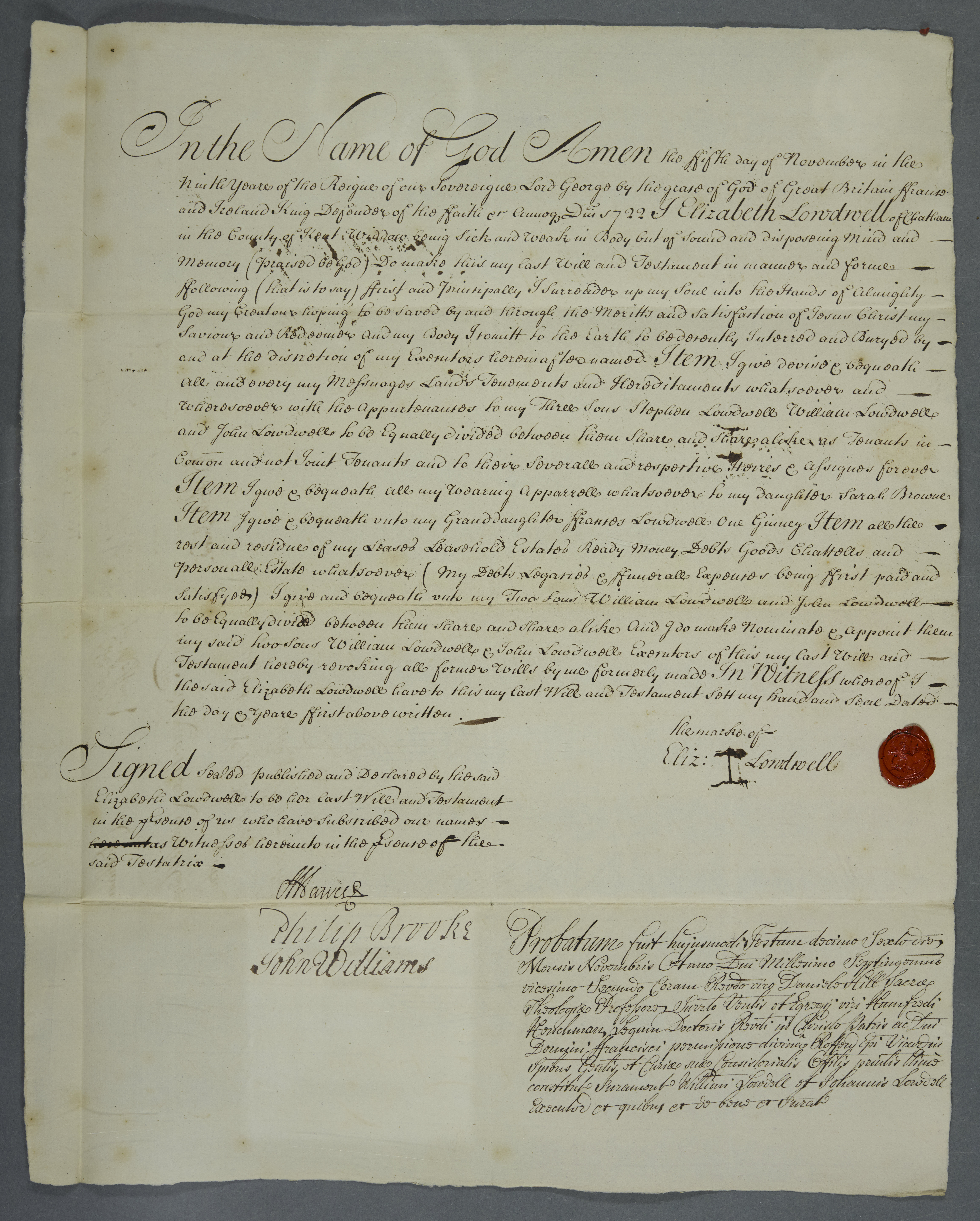
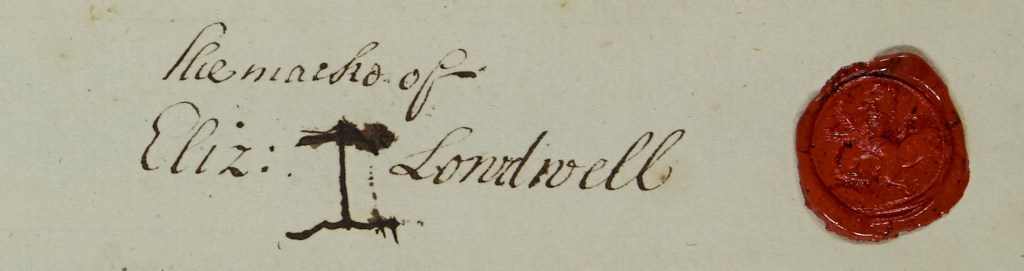
As Stephen 2’s will did not specify the division of property between his children, who were all under the age of 21 at the time of his death, it was left to Elizabethnee Long (1652 – 1722) to determine this. She died in 1722, leaving all of the land to be split equally between her three surviving sons as “tenants in common” i.e. each with their own share. Interestingly, Elizabeth specified that all of her income from leases, her money and goods would go to her two younger sons rather than to Stephen Lowdell 3 (1675 – 1723), the oldest. We can only speculate as to why this may have been. Stephen 3 died the following year so it is likely that he was already ill, though his inheritance would have passed to his children at that point. Perhaps Elizabeth felt that Stephen 3’s younger brothers – a shipwright and a grocer – had more need of the income, Stephen 3 being a gentleman. Or perhaps there was a family rift; of Stephen 3’s eight children, only one, his eldest daughter, received anything in Elizabeth’s will. We will never know! The below extract from Elizabeth’s will shows that, even though she was a landowner’s wife, she was uneducated – as was common for women at that time.
Elizabeth Lowdell nee Long (1652 – 1722) mark and seal from her will, 1722 – kept at Kent History and Library Centre
As noted previously, Stephen Lowdell 3(1675 – 1723) is recorded as being a gentleman of independent means, as early as 1699 when he married Elizabeth Yates (1673 – 1701) at around 24 years old. He had progressed to making money from the land he owned rather than farming it himself. Sadly, Elizabeth died less than two years later, and was “buried in woollen” in nearby Headcorn. This was in line with the law, though not everyone adhered to it. Five years later, Stephen 3 married Hannah Hooker (1682 – 1762), who came from another Kent landowning family. Stephen 3 and Hannah had eight children, four sons and four daughters.
Although Stephen 3 was already doing relatively well, he would have benefitted from his wife’s inheritance from her father, John Hooker (1642 – 1716) which included farms and lands in Mereworth. John Hooker left lands and tenements in Ightham to Stephen and Hannah’s oldest son, John Lowdell (1705 – ?). John Hooker also bequeathed the mortgage income from a house he owned in Chatham to Stephen 3’s “four younger children” – unfortunately the three further children born to Stephen and Hannah after John’s death missed out on an inheritance from their maternal grandfather.
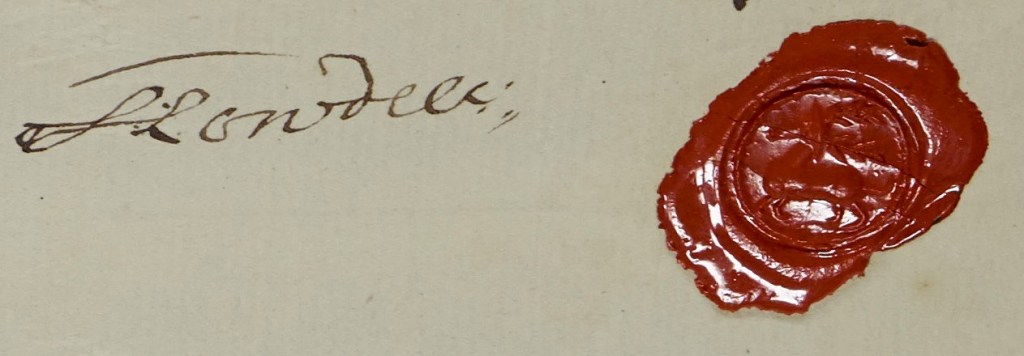
Stephen 3 died in 1723 at the age of 48, having also been suffering from illness. His will made provision for his wife, selling his share of the lands he had inherited from his mother so that the proceeds could pay any debts and support his family – his younger four children were all under the age of ten years old. All of Stephen 3’s lands were to be divided equally between his children, with the proviso that those who had already inherited from their grandfather would not receive more than the others. Stephen’s signature and wax seal survive as part of his will, see below.
Stephen Lowdell (1675 – 1723) signature and seal from his will, 1723 – kept at Kent History and Library Centre
It is at this point that the trail runs cold, as I have not yet been able to find wills for any of Stephen and Hannah’s children. We do not know how the land was divided up or how long any of it remained in the family. Our ancestor was Stephen and Hannah’s third son and fifth child, William Lowdell (1715 – 1755) who, by the time of his marriage in 1734 was living in Rochester. It may be that he inherited land there, but this would have been on a more modest scale, as future generations of the Lowdell family appear to have been more working class, with occupations including carter, shoemaker and fish dealer.
Wills are held by the National Archives (also available on Ancestry) – England and Wales Prerogative Court of Canterbury, and by Kent History Centre – Rochester Consistory Court. Any transcription errors are my own.
I was not aware of the Elmore family before I began researching our family history. We are descended from Louisa Elmore (1836 – 1901), who was my grandmother’s great-grandmother. I have enjoyed finding out more about this branch of the family and wanted to share what I have discovered. I have attached two family tree charts which show firstly where the Elmore family fits into my grandmother’s tree, and secondly, the full Elmore family as far as I have been able to trace them.
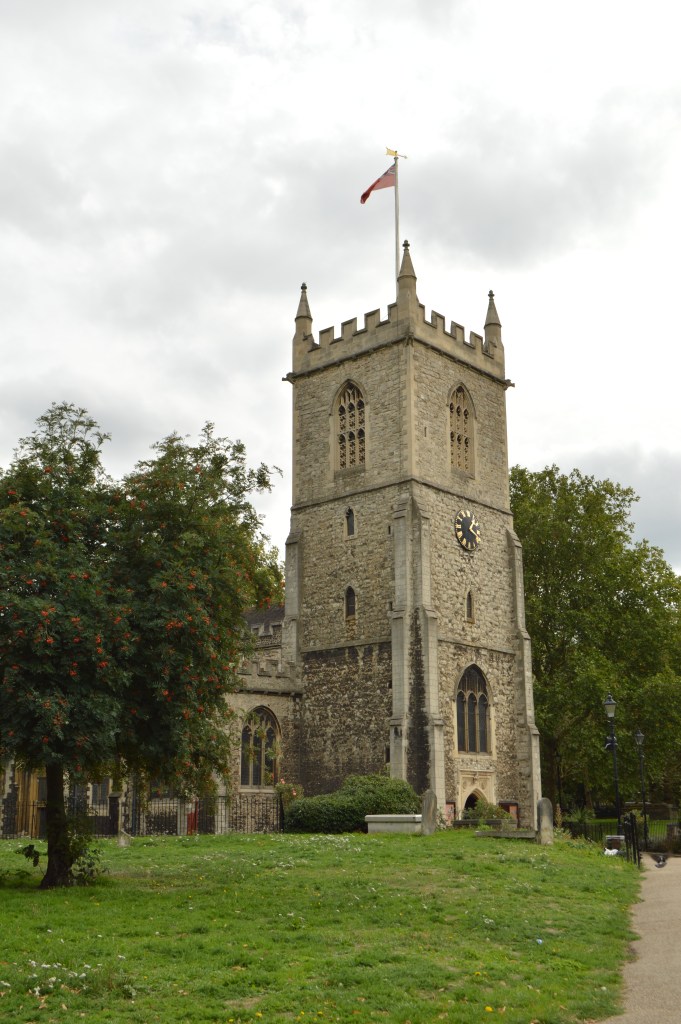
The earliest Elmore ancestor I have found is John Elmore (dates unknown), my 9 x great grandfather (NB parish registers sometimes spell the surname as Elmer, Elmar or Hillmore). John and his wife Mary (maiden name unknown) lived in Ratcliff in east London during the 1670s, where he was a mariner. John and Mary had at least two children, who were baptised at the parish church of St Dunstan and All Saints in Stepney; one of them, a boy, was presumably stillborn as he was buried without being given a name. Although I have not been able to find John’s own baptism, it is likely that he was originally from the east end of London as there are a number of other Elmore names in the parish registers of St Dunstan, some of whom died during the Plague of the 1660s. The church was the parish church of the British seagoing empire and still flies the flag of the merchant navy. Unfortunately no records of John’s career have survived so we do not know in what capacity he served.
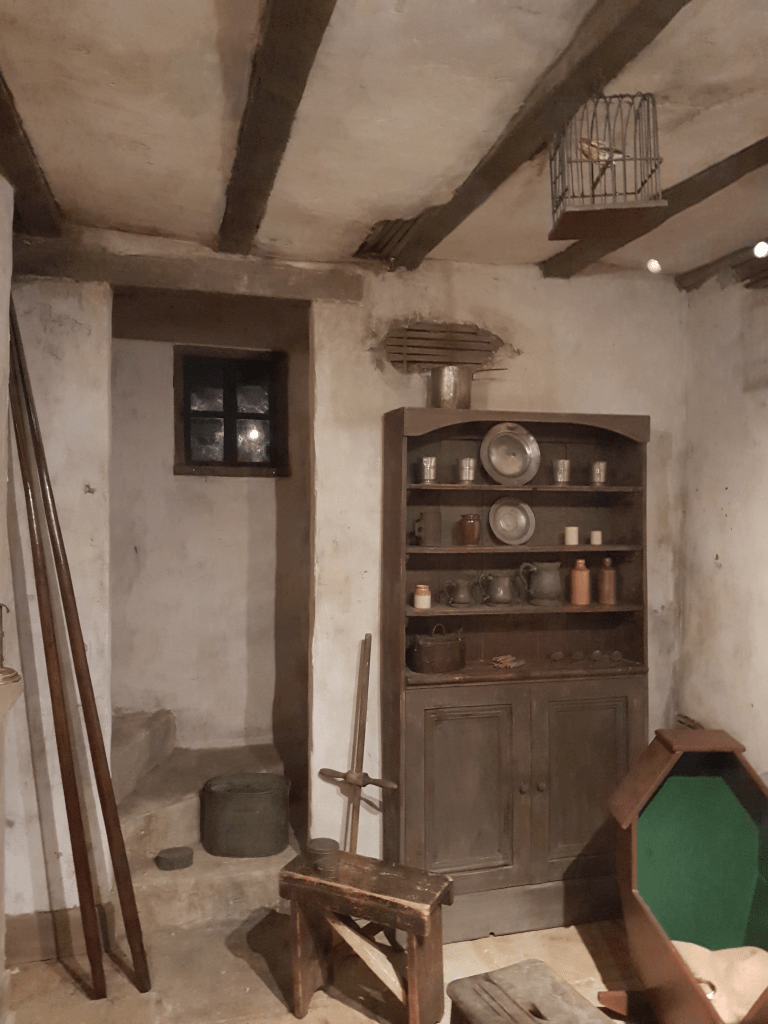
Ratcliff in the seventeenth and eighteenth century was part of an area of the east end known as “Sailortown”, close to where Canary Wharf sits today. It was a maze of alleys and lanes, full of ships’ chandlers, lodging houses, alehouses and brothels. The Museum of London Docklands has recreated some of these streets as part of its permanent display. It was common for seafaring occupations to run in families, and indeed, John and Mary’s other son, Henry Elmore (1671 – 1736) also served as a mariner. The family may have lived in a house like the one below.
Typical home in Sailortown, Museum of London Docklands, May 2018
Henry Elmore grew up in Ratcliff. He was married to Charity (maiden name unknown) and the couple baptised their five children at St Dunstan’s church in Stepney. Although no records of Henry’s career survive, we can piece together some of his life from his will, which confirms that he served in the Royal Navy. It would appear that he lived for a time in Ipswich, a naval port, as he owned and rented out a cottage there which later passed to his son Henry. It would appear that Henry Senior had been living at the Royal Greenwich Hospital for the last years of his life, possibly following Charity’s death in 1734. The hospital (more of a retirement home) had opened in 1692 and was for veterans of the Royal Navy who mainly came from poor backgrounds. The fact that he was there means that he had probably been wounded in some way during his service. This link gives some more information as to what life would have been like for Henry at the Royal Greenwich Hospital.
Henry and Charity’s eldest child, and only surviving son, was our ancestor Henry Elmore (1705-1757). Henry followed his father into the Royal Navy, but, rather than going to sea, he worked in the shipbuilding industry. Specifically, he was a caulker – sealing gaps in the hulls of ships to make them watertight. In July 1730, when he was 25 years old, Henry was working at the naval shipyard in Woolwich when he was one of a group of caulkers who effectively went on strike “whilst breaming and caulking the Falmouth. They claimed that water coming in through the dock gates had wet their feet, but Hayward [the Master Shipwright] says this was their fault as they were ordered to caulk the gates to prevent this” [National Archives]. Henry was fined a day’s wages for his part in the protest, the ringleader lost 3 days’ pay as well as his job.
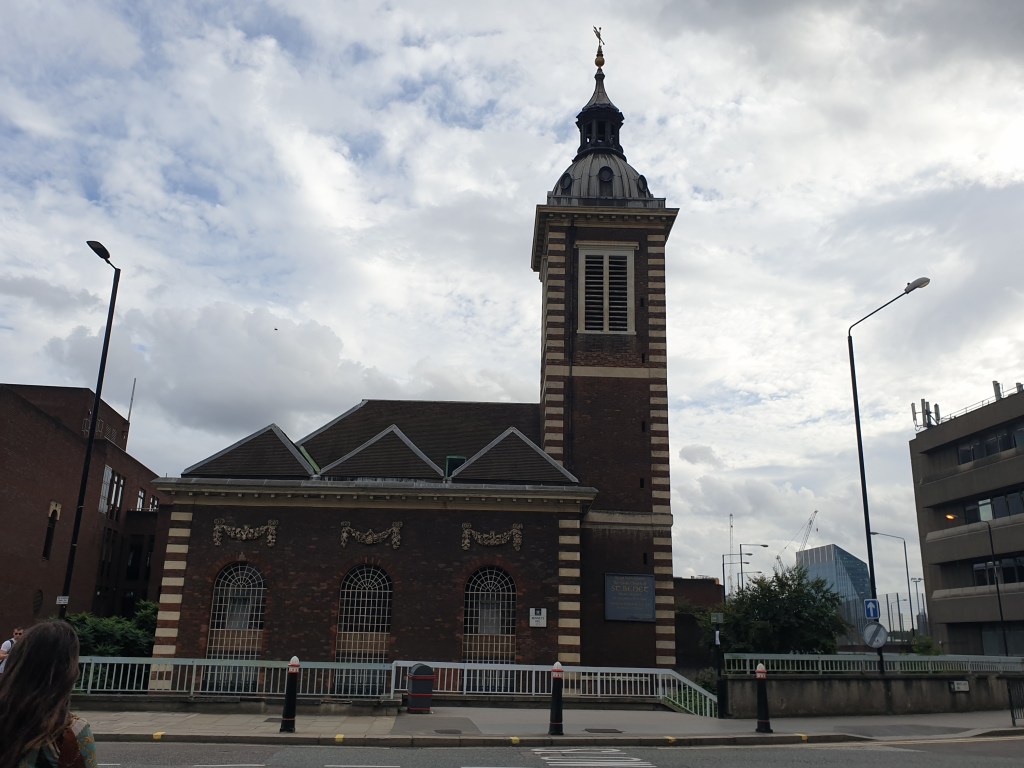
By June 1735, Henry had moved to the naval shipyard in Plymouth where he continued to work as a caulker. Documents held by the National Archives record that he had been granted leave to return to London but on his arrival had learned of his mother Charity’s death. Henry requested a transfer to the royal shipyard at Chatham to enable him to care for his “elderly father” (Henry Senior was 64). This was not a bad career move as Chatham was the centre of naval shipbuilding in Britain with over 500 naval ships built there over its 400+ year history. The request was granted in July 1735 and Henry returned home; his father died the next year. Presumably he had met Elizabeth Young (1707 – ?), a local girl, when he had visited Stepney on leave, as the couple married the next month at St Benet’s church. This church in London was often favoured by couples wanting to marry in a hurry as it was exempt from the reading of banns.
St Benet’s, Paul’s Wharf, where Henry Elmore married Elizabeth Young in August 1735 (August 2019)
Henry and Elizabeth settled in Gillingham initially and had nine children. They moved to Chatham at some point. Henry continued to work as a caulker and trained up apprentices at the shipyard. It seems that he didn’t have much luck. In 1743, there is a record of a request from Henry for another servant “now he has been cleared of the charges” – there is no record of what these charges had been. Henry’s next apprentice, Robert Hutchins, started in 1743 but died in 1747 not long before his apprenticeship ended. Letters from the Commissioner at Chatham in 1747 record Henry’s request for another apprentice and the three-month delay before this was enacted.
Henry died in Chatham in 1757. His will shows that he was not wealthy, his household goods amounted to less than twenty pounds. As a result, only one of his children, his son Joseph, inherited anything – the cottage in Ipswich. Although there are no records of Joseph’s baptism, it is likely that he was Henry and Elizabeth’s oldest son. He also had a naval career, serving on three ships. Joseph was serving on the Harwich when she was involved in the capture of two French vessels, and also when the ship was wrecked off Cuba in 1760. Joseph then transferred to a depot (support) ship, the Ocean, where he served from 1760 – 1762. There appears to have then been a thirty year gap before he sailed again, on the prison ship, the Hero. He was admitted to the Royal Greenwich Hospital in 1798 having lost his left eye and with wounds to both of his arms.
HMS Ocean c1771 (Wikipedia)
We are descended from Joseph’s younger brother, the third of Henry and Elizabeth’s three sons, who was named Young Elmore (1745 – 1824) probably to maintain Elizabeth’s family name. He was the first of several Young Elmores as the name became something of a family tradition. Our Young Elmore was born and raised in Chatham and followed his father into the shipyard where he worked as a bricklayer, he lived in Cross Street just a few streets away. He would have been involved in work such as the building and repair of wharves and dock walls, as well as the various buildings and storehouses that formed part of the shipyard. Young had apprentices and was sufficiently well thought of that his daughter’s marriage was noted in the local newspaper in 1790 (below). By 1798 he was managing the bricklayers.
Kentish Gazette, 27 April 1790
Young was actually married three times. His first marriage, to Ann Furner (1747-1779) bore five children, including another Young Elmore, and our ancestor Thomas Elmore (1773-1824). Ann died in 1779 at the age of 32, her youngest child was only a year old. Young remarried the following year and had a further five children with his second wife Catherine Bennington. Sadly, the couple buried their two youngest daughters in 1787, the youngest was only a few weeks old. When Catherine died, it made the local press:
Kentish Weekly Post, 29 June 1798
Young remarried again in 1800, to Hester (or Esther) Wilson who outlived him. When Young died in 1824 he left a house in Chatham with a large garden, but like his father, the value of his other possessions came to less than £20.
Young and Ann’s eldest son, Young Elmore (1770-1856) also became a bricklayer at Chatham, having served an apprenticeship. He and his wife took the opportunity to try and enrol three of their sons in the Royal Hospital School at Greenwich which had been set up to help the children of impoverished seamen, but had recently expanded to educate children from other seafaring backgrounds. At least one child was rejected due to being over age.
Thomas Elmore (1773-1824) was the third of Young and Ann’s children and was born in Chatham. He married Elizabeth Carter (1768-1855). Strangely there is a record of their banns being read in London in 1786 but the marriage did not take place until 1791. Assuming that there was not another couple with the same names, it may be that Thomas had attempted to marry Elizabeth when he was only 13 years old. The couple lived in Chatham and went on to have at least five children. Thomas was a “house carpenter”, i.e. he was responsible for the woodwork of a building from the foundations to the roof, as opposed to a joiner who was usually more skilled and responsible for the more visible parts of the building. Thomas’s will was witnessed by someone based at the marine barracks in Chatham so it is likely that he worked there; this was the base of the Chatham Division of the Royal Marines from 1775. Thomas’s will provided for his wife and included the rent from various premises that he rented out, however his own possessions again were valued at less than twenty pounds.
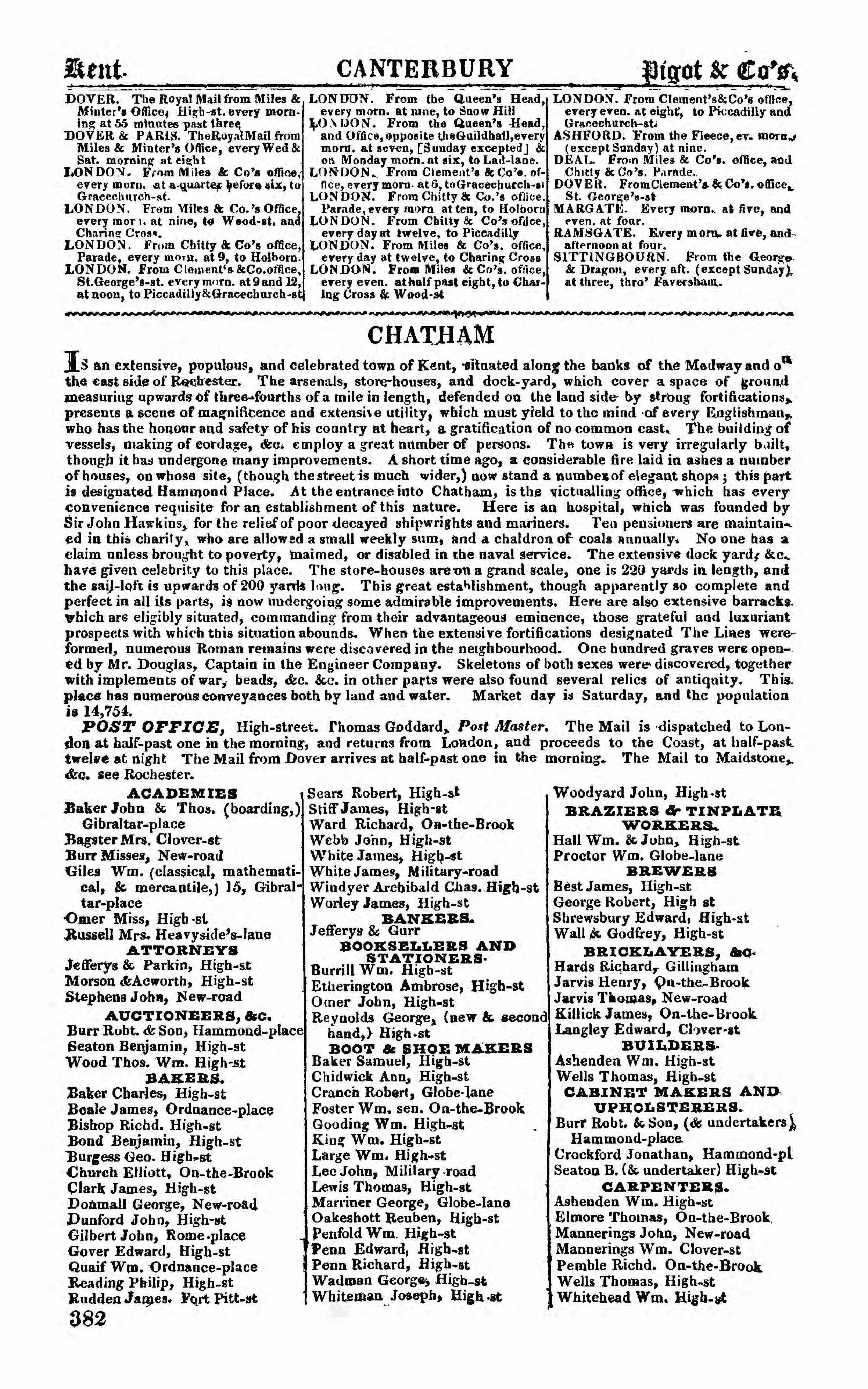
Our final male Elmore ancestor was Thomas and Elizabeth’s second son Thomas Elmore (1807-1847) (the eldest son being another Young). Thomas was also a carpenter, but it seems that, with him, the Elmore connection to the Royal Navy ended. He is listed in various trade directories (including the one attached from 1824 which gives a nice description of Chatham at the time), and appears to have lived and worked at The Brook, now the main road linking the shopping centre with the site of the Dockyard.
Thomas and his wife Elizabeth Louisa Pratt (1809-1853) had six children and remained in Chatham. We know little about their lives except that Thomas was twice the victim of theft. In 1835:
The Gravesend and Milton Express, 28 March 1835
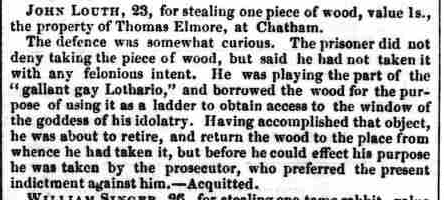
The second theft, ten years later, has an interesting story as set out below:
West Kent Guardian, 22 March 1845
We can only assume that John Louth was acquitted because his tale was true and not because he acted his way out of the conviction!
This brings us to our final Elmore ancestor. Louisa Elmore (1836-1901) was Thomas and Elizabeth’s third child and youngest daughter. Like the previous three generations, she was born and raised in Chatham, baptised at the parish church of St Mary’s (now closed). At the age of nineteen she married Thomas David Lowdell (1835-1915) who was at that time a baker. I will write about the Lowdell family separately. The couple had five children and lived most of their lives in the centre of Chatham, moving further out of the town not long before Louisa’s death in 1901. Census returns do not record any occupation for Louisa so she would have kept the house and brought up the children while her husband provided financially for the family in his 40+ years working as a fish dealer. Even when the family moved away from its naval origins, the sea was central to our ancestors’ lives.
NB many other members of the Elmore family also served as mariners, both in the Royal and merchant navies but I have had to limit my focus to just our direct ancestors and a couple of their other children here!
William Enoch Butland (1875-1939) was the oldest son of William Ellis Butland and had a particularly illustrious GWR career spanning 50 years. Like his father, he began his working life as a GWR carpenter, a job he was doing by the age of 16, in Taunton. Ten years later, he was living in Weston Super Mare and had progressed to the role of Permanent Way Inspector, having served an apprenticeship. William Enoch married the same year, and he and his wife Bessie moved to Sydney, Australia where he worked on goverment railways for two years. The couple and their two children (both born in Australia) returned to England in 1903 and settled back in Taunton.
William Enoch returned to the GWR and the role of Permanent Way Inspector. Local press in 1904 and 1905 show him representing the company at two inquests into deaths on the railways, one of which was particularly gruesome. The full articles are attached.
In 1909, William Enoch took up a new position as Divisional Inspector of Bridges and the family moved to Shrewsbury, where they remained for ten years before returning to Devon and settling in Plymouth. William Enoch’s role involved travel all over the area served by the GWR though, and an article form 1927 reports an injury he received while working in Cornwall.
Bath Chronicle and Herald, 4 June 1927
Despite this, William Enoch was known as a champion of safety on the railways and also promoted education of railway workers. He was himself an intelligent and articulate man who particularly liked to write and had a total of seven articles published by the Permanent Way Journal between 1896 – 1929. One of the two papers published in 1929 actually had the work on Saltash bridge (article above) as its subject. The other, entitled “Technical education for the permanent way staff”, won him a prize.
The Western Morning News and Mercury, 5 March 1929
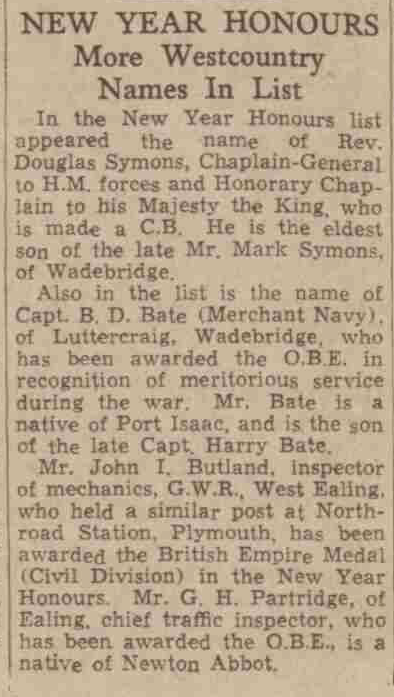
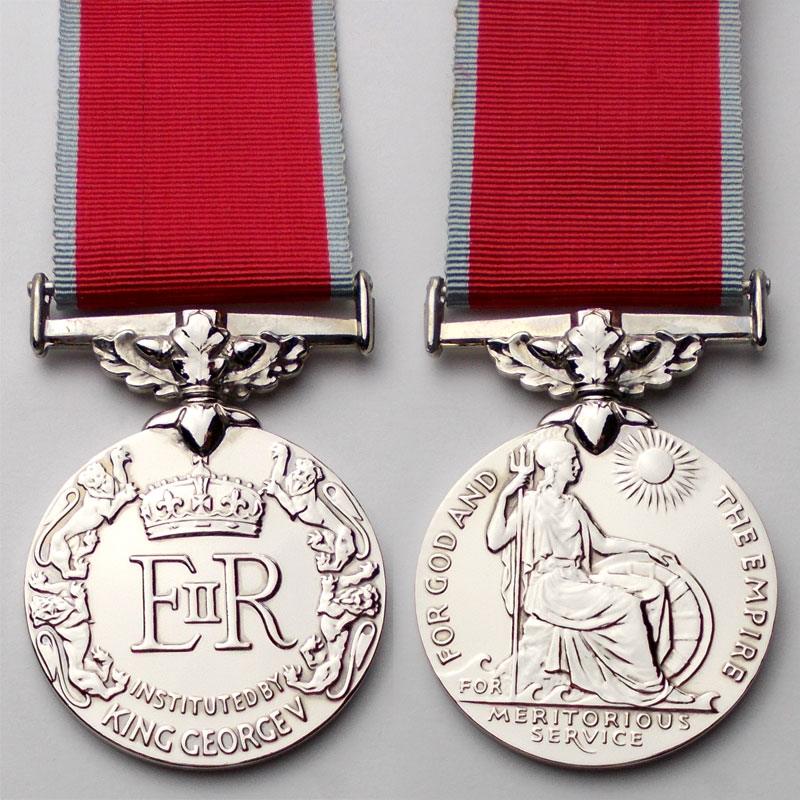
In 1936, William Enoch’s work was formally recognised and he received a British Empire Medal (BEM) for meritious service in the New Years Honours. I have attached some further articles about William Enoch below. Sadly, he died in 1936, only a few months before he was due to retire.
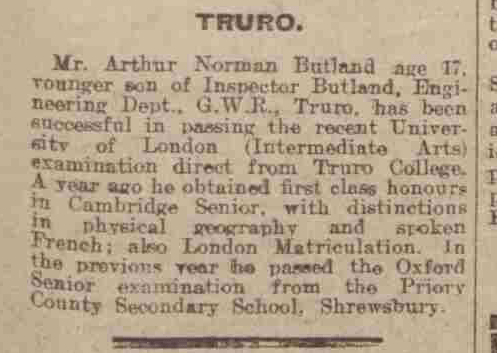
William Enoch’s younger son, Arthur Norman Butland (1904-1979) worked for the GWR, again in engineering. Also highly intelligent, he was for a time the youngest person in England to achieve a BA (Hons) degree.
The Cornishman and Cornish Telegraph, 24 August 1921
Arthur worked as Resident Engineer at Greenford in Ealing, before being promoted to Assistant Divisional Engineer at Taunton in 1940. By 1945 he was the Assistant District Engineer and helped to organise an exhibition showcasing penicillin and modern medicine on behalf of the GWR. Two years later, in May 1947, Arthur took up a new post in London, as assistant to the Chief Engineer at Paddington station.
On 1 April 1948, GWR, along with the other 3 main railway companies, was nationalised and British Rail was formed. Arthur received his next promotion, to Divisional Engineer (Western Region) back in Taunton in November 1948. The following April, he took up the Divisional Engineer post at Bristol.
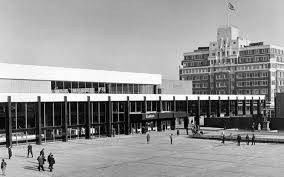
Like his father, Arthur also had articles published in the Permanent Way Journal, one in 1933 related to divisional bridges, and the other in 1964 was entitled “The permanent way ahead”. He was passionate about innovation and wanted to see the railways brought up to date, he is quoted in this 1960 article (from p212). Arthur eventually became Chief Engineer (Midland Region) for British Rail, a role that saw him leading on the plans to redesign the Euston mainline in the 1960s as part of the phasing out of steam locomotives and electrification of the railways; he wrote this article about the project in 1966 which includes several recommendations for future electrification work. The project encompassed the rebuilding of Euston station as well as Manchester Oxford Road and Piccadilly stations, Birmingham New Street, Coventry, Stafford and Northampton. The new Euston station reopened in 1968.
Euston Station in 1968
At some point during the Euston project, Arthur was appointed Chief Civil Engineer for the Railway Board. In September 1966, he appeared in the press again, when he announced the introduction of new track maintenance technology to replace manual work. More detail on this can be found in the attached file which also contains other articles about Arthur’s career. Arthur died in Woking, Surrey, in 1979.
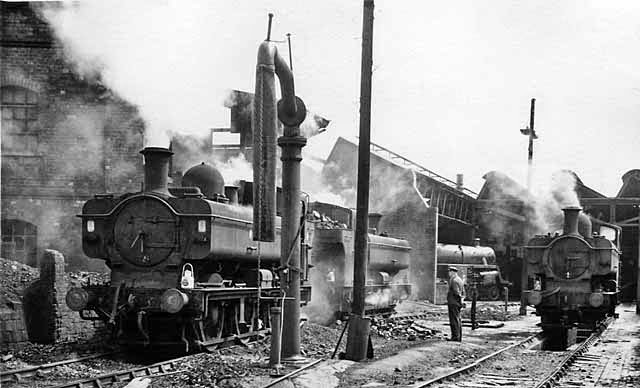
The youngest of William Ellis Butland’s sons was Edwin James Butland (1878 – 1919). He was actually the only member of the family to work on the steam locomotives themselves. Edwin James joined the GWR in 1893, at the age of 15, and started work as an engine cleaner at Taunton station. By 1896 he had become a shunting fireman at Taunton, responsible for stoking the engines of the locomotives. This article from 1926 shows that the career path to engine driver often started from cleaner to shunting fireman, as men learned the intricate details of how the locomotive worked. Edwin James progressed through the ranks, becoming a third class fireman in Gloucester, then moving to Wolverhampton where he became a first class fireman. By 1903 he was an engine turner, before finally becoming an engine driver in 1907.
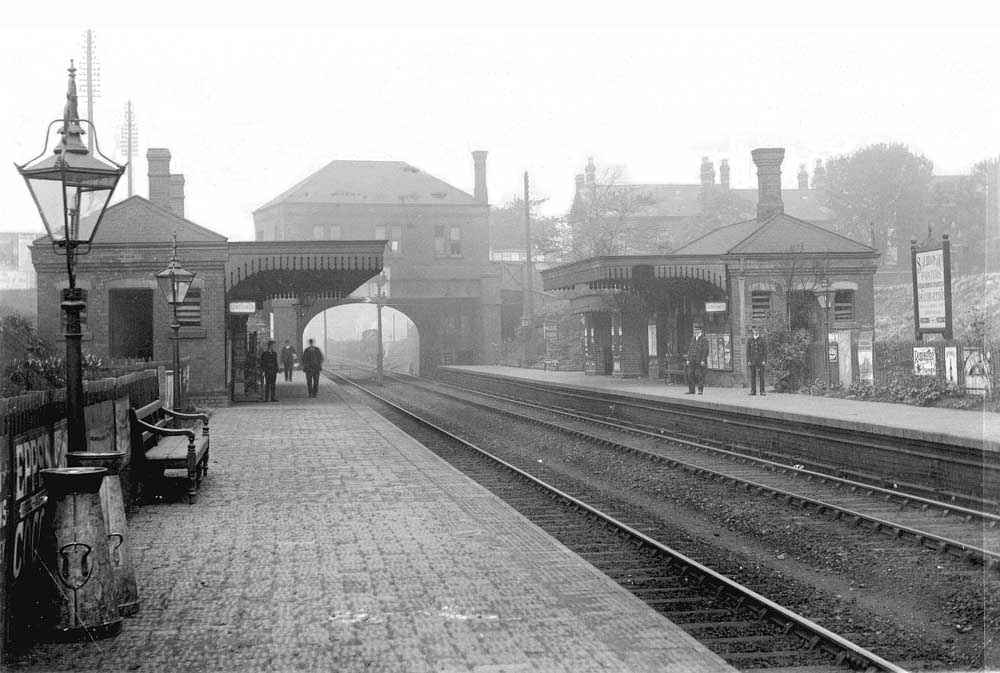
Edwin James’ career did not end there, however. In 1909 he became a Locomotive Sub Inspector at Small Heath station in the Birmingham area.
The 1910s saw some more job changes. In 1911, he was working as a Locomotive Inspector in Aston, Birmingham, then moved to Stourbridge where he worked as a Sub Inspector again before working as Assistant Foreman of the Locomotive Shed there. Whilst there, Edwin James fell and hit his knee on a rail, which required two weeks off work while the bruising healed. His final move appears to have been to Chester, near to his wife’s home town of Birkenhead – where the GWR line ended. He was working for the Chester and Croes Newydd District as Assistant Foreman in 1915, this was a large locomotive shed in Wrexham, north Wales.
Edwin James sadly died in 1919 aged only 40 years old. Croes Newydd was site of the last working locomotives for the GWR and closed in March 1967; a year later the very last steam-powered passenger locomotive ran in England and the days of steam railways were officially over.
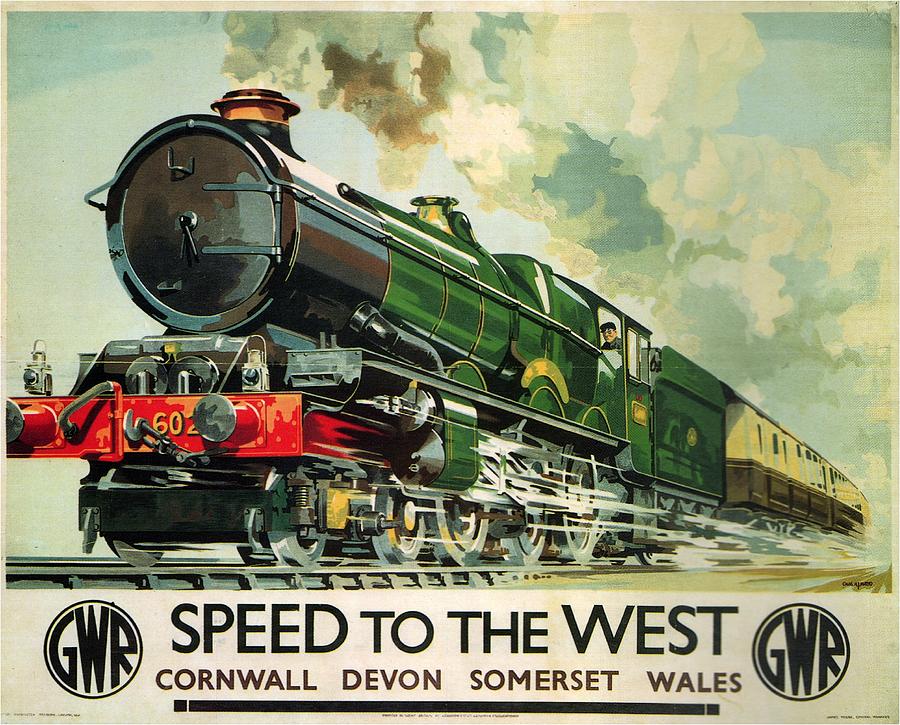
Growing up, I was aware that my grandfather, William Edwin Godfrey Butland (1909-2007) had worked for a period for the Great Western Railway, and held a lifelong love of steam engines. However, it has only been through undertaking my own research that I have discovered that the Butland family connection with the GWR actually went back 100 years prior to my Grandad, who was actually the last of four generations of Butlands to be employed by the railway company.
My Grandad’s great-grandfather, John Butland (1811-1878) was the first of the family recorded as working for the GWR. John was a stonemason who lived his adult life in Exeter. As a contractor, he would have undertaken a variety of jobs, however his most notable achievement was his work constructing railway bridges. John worked directly with Isambard Kingdom Brunel, the engineer who planned and built the Great Western Railway’s first line which ran between London and Bristol. John actually suffered from epilepsy which limited his work in later years, as he was not able to work high up. It is therefore likely that John’s involvement with GWR happened earlier in his life, possibly from when work on the railway began, in 1836. It should be noted that John’s father, Matthew Butland (1788-1863) and one of his brothers, another Matthew, also worked as stonemasons so it is probable that all three men were engaged in working on the railway construction project, although just a record of John’s involvement remains.
Only two of John’s five sons survived infancy. One, John James Butland, became a postman. The other, William Henry Butland (1844-1929), went on to have a long and successful career in the GWR. William was known as William Ellis Butland, the name given to his older brother who had sadly died as baby (Ellis being his maternal grandmother’s maiden name). He trained as a carpenter and joiner and was already working in this field by the age of 17. It is possible that he had a brief career in the Merchant Navy but deserted at Falmouth in 1867. At some point in the 1870s, William Ellis starting working as a railway carpenter around Bath, and entered the employment of the GWR in August 1877. His employment records show that by 1888, he was earning 8/6 per day. He also had some responsibility within the organisation and was probably managing a number of staff, as the below article from 1885 shows.
The Western Times, 7 January 1885
In December 1897, William Ellis was appointed Inspector of Mechanics. This required him to move with his family to Wolverhampton, where he was in charge of the “new works” at Hockley, the main goods depot in the midlands area. Hockley station was on the GWR line from Paddington to Birkenhead and it is likely that William Ellis was involved in the work to increase the number of railway lines between Hockley and Handsworth, as well as partially rebuilding the station. In 1903, William Ellis was appointed Bridge Inspector, a role that involved him maintaining and occasionally demolishing some of the bridges that his father had built. It also required some international travel including Mexico, Chile, Peru and Egypt. By 1913, his daily pay rate had increased to 11/- per day. William Ellis was finally transferred to GWR salaried staff in 1918 with pay of £175 per year for his role as Inspector of Railway Civil Engineering Works, but retired the following year, receiving both a GWR and state pension.
All three of William Ellis’s sons followed him into the GWR. We are descended from the middle son, John Isaac Butland (1876 – 1963). I have written about the careers of John’s brothers William Enoch Butland and Edwin James Butland in a separate blog.
John Isaac Butland first started working for the GWR in 1890, when he was 14 years old. His first job as a messenger at Taunton station lasted only 4 months, and he resigned in July of the same year. The following year, he was back at Taunton, working as a carpenter for GWR as his father had done. When the family moved north to Wolverhampton, John Isaac retained his GWR employment and continued working as a carpenter.
John married in Wolverhampton and had his first child there before moving south again. By 1907 he was a Clerk of Works in Bristol, a role that would have involved inspecting the workmanship, quality and safety of work on railway construction sites and ensuring that plans were being followed correctly. He remained in this role for several years and at some point joined the trade union, The National Union of Railwaymen (formed in 1913).
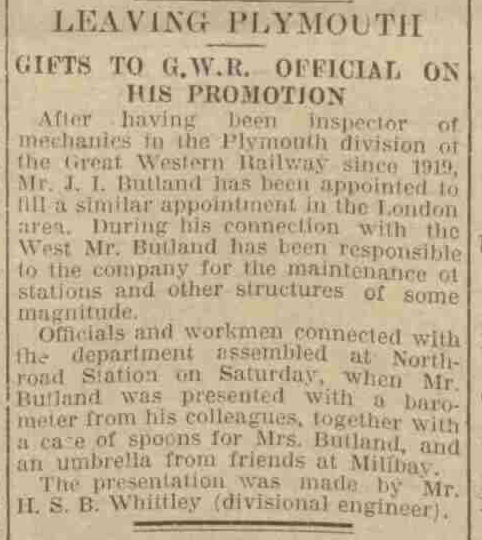
By 1921, John Isaac was working as Inspector of Mechanics at Plymouth’s North Road Station, though his work over the next few years also saw him overseeing the maintenance of other stations on the western line. In 1930 he was appointed to the role of Inspector of Mechanics at West Ealing station, despite having the same job title, this was a promotion for him.
The Western Morning News and Mercury, 17 March 1930
The family remained in Ealing and the 1939 register shows John Isaac living at 6 Drayton Road with his wife and son, my grandfather. This was just around the corner from West Ealing station. John Isaac was now a Railway Maintenance and Repairs Inspector in the Civil Engineers department of the GWR, and was also volunteering as an air raid warden. At this point, air raids had not yet started, but he would have been responsible for registering everyone in the area he was responsible for, and enforcing adherence to the blackout. Ealing was not as heavily bombed as some parts of London, but there were bombings in the area. Fortunately Drayton Road and the immediately surrounding streets escaped unscathed. In 1942, John Isaac received the British Empire Medal for services to Civil Defence, it is unclear whether this was for his work as an air raid warden or for his day job, railway staff being classed as essential workers during the war.
The last of the four generations of Butlands to work for the GWR was my grandfather, William Edwin Godfrey Butland (1909-2007) (known as JoeButland), the son of John Isaac. Joe had only a brief railway career, working in 1939 as a New Work Surveyor in the Civil Engineering department – the same department that other family members had worked in, including his father. He also worked as a draughtsman, making detailed technical plans or drawings. However, he left the GWR in the 1940s and had a complete career change, training instead to be a vicar in the Church of England. Steam trains remained a passion however, and he had paintings of steam trains at home throughout his life, as well as visiting railways on holidays.
These four generations were not the only Butlands to work for the GWR however. I have written a separate blog about the other descendents of William Ellis Butland, some of whom had particularly distinguished railway careers.
Several of the members of the extended Gooding family were in the military and/or fought in the First World War.
Our ancestor, Arthur Gooding (1878 – 1933) travelled to Dublin and enlisted with the Hussars of the Line in December 1894, claiming to be 18 years old. We know from his enlistment medical that he was 5’ 7 3/4” tall with black hair, blue eyes and a fresh complexion. Unfortunately for Arthur, he was discharged from the army in January 1895 after a total of 54 days when he was discovered to be aged only 16.
Arthur Gooding’s older brother, Thomas Joseph Gooding, had enlisted in the Royal Artillery in 1889 when he was 18 years old, so it is likely that Arthur was wanting to follow in his footsteps. Thomas served as a driver and was called up to serve in the Boer War in South Africa, travelling there on 29 December 1899. His youngest child, Harold, was born the following month and given the middle name Orient, after the ship his father had sailed on. Thomas’s military records are unclear as to what happened to him in South Africa, but by August 1900 he was back home in Greenwich, where he sadly died, aged 30.
Private Frederick Bertie Gooding (1885 – 1917) was the son of Joseph Gooding with his second wife Mary Ann Gale, and therefore half brother of Arthur Gooding (1878 – 1933) and Thomas Joseph Gooding. Fred served in the 11th Battalion, Middlesex Regiment but was killed aged 32 in Flanders on 25 September 1917, leaving behind his wife of one year, Florence. He was buried in Wulverghem-Lindenhoek Road Military Cemetery, Heuvelland, West Flanders and is also commemorated at St James’s church, Southwark.
Arthur’s son, my great-grandfather, Arthur Joseph Charles Gooding (1900 – 1961) enlisted in the RAF on 1 December 1917, receiving the salary of one shilling per week in line with his “boy” status. At present, his army records are not available online, however Arthur wrote his own memoirs which provide a lot of detail of his early years in the armed forces.
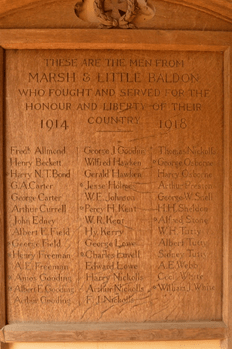
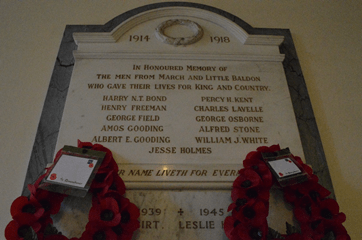
Private Amos William Gooding (1894 – 1915) was George Jubilee and Susanna’s grandson, by their youngest son, Herbert Ellis Gooding, known as Ellis. He had joined the 4th Battalion Oxford & Bucks Light Infantry in 1914, but was discharged later the same day for being medically unfit (spinal curvature). However he was later able to enlist in the 8th Battalion Oxford & Bucks Light Infantry. Amos died of peritonitis aged 21, on 25 August 1915, in Salisbury. There are no records of his ever serving abroad. As Amos was still part of a military unit at the time of his death, he was however eligible to be included on the memorial inside St Peter’s Church, Marsh Baldon.
Private George Jubilee Gooding (1887 – 1917) was Amos William Gooding’s older brother. Though the grandson of George Jubilee Gooding (1809 – 1887), he probably took his middle name from Queen Victoria’s jubilee which was celebrated in 1887. He was a gardener, living at 20 Marsh Baldon when he enlisted in the 8th Battalion, Royal Warwickshire Regiment, aged 28, in February 1916. George Jubilee Gooding died on 12 June 1917 and is buried in an official war grave in Marsh Baldon churchyard, however his death is not commemorated on the memorial inside St Peter’s church, Marsh Baldon (see below). His army records show that he had been discharged the previous month (26 May 2018) due to being medically unfit; specifically “defective sight and defective intelligence”. It would appear that George Jubilee Gooding never saw active service during the First World War and his discharge from the army prior to his death may be the reason that he is not counted among the war dead on the memorial.
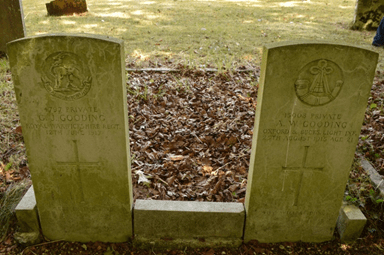
The Gooding brothers are buried side by side in Marsh Baldon. Both graves were only commissioned in 1927, suggesting that there may have been a dispute, with the family perhaps needing to provide evidence that their deaths were exacerbated due to their time in the territorial army.
War graves of George Jubilee and Amos William Gooding, Marsh Baldon (2018)
Acting Bombadier Albert Edward Gooding (1897 – 1917) was the son of Edmund and Martha Gooding, great-nephew of George Jubilee Gooding (1809 – 1887) and a great-grandson of John Gooding (1769 – 1823) and Sarah Polley (1774 – 1863). He was born in Marsh Baldon, living at number 22, and enlisted for the 51st Siege Battalion, Royal Garrison Artillery in 1915 aged 19. He died in of wounds on 20 September 1917, having fought in Ypres. He is buried at Spoilbank Cemetery, West Flanders. His grave is inscribed “He rests in peace but his name liveth for evermore”.
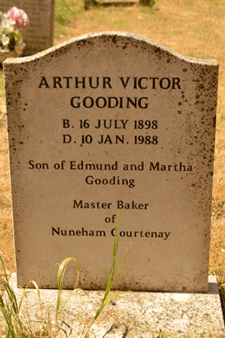
Arthur Victor Gooding (1898 – 1988) was the older brother of Albert Edward Gooding and was born and lived in Marsh Baldon. Having survived the war, he ran the village bakery in Nuneham Courtenay for 33 years before retiring and living in Wallingford. Arthur Victor gave an interview in 1981 on a local radio programme “Linger Awhile”. According to the programme’s records, he talked about:
… his early life in Marsh Baldon. Born in 1898, twelfth in a family of fourteen. The village at that time, no paved roads, horses the only transport. Talks about his schooldays, mentioning the strict discipline, the high of singing, maypole dancing. Occupations in the village. His father a bailiff for £1 a week, other workers had ten shillings. Everyone was poor, but they had gardens or allotments for growing food. Left school at 14, worked for a farmer, then for a and for his father until he was called up for the army. Importance of the village green, the annual fair, the cricket team. After the war he married and worked with his wife as village bakers at Nuneham Courtney 1925-1953 All the bread made by hand delivered to customers. They supplied bread to Lord Harcourt at Nuneham House. Never had a holiday. Old characters in the villages.
He died in 1988 and is buried in Marsh Baldon.
Grave of Arthur Victor Gooding, Marsh Baldon (2018)
The service of the four men from Marsh Baldon is commemorated by a plaque in the porch of St Peter’s church. Amos and Albert are also commemorated on a memorial inside the church.
War memorials at St Peter’s Marsh Baldon (2018)
Noah George Jubilee Gooding (1887 – 1972) was born in Marsh Baldon and moved to Dorchester as a child with his parents Alfred and Celia (see School House). Noah was another great-nephew of George Jubilee Gooding (1809 – 1887) and great-grandson of John Gooding and Sarah Polley and was also named after Queen Victoria’s jubilee, the year he was born. Known as George, Noah served in the Royal Engineers, signing up at the age of 27 having previously been a bricklayer. He survived the war.










 Butland Gooding Family Tree