By the early 12th century, the Fitz Stephen family, early ancestors of our Gooding family, was established in Gloucestershire. Thomas Fitz Stephen (?-1120) had at least two sons, one of which, Ralph Fitz Stephen (?-?) lived in Wapley, in the south of the county and may have been a royal chamberlain. He also had at least two sons: Ralph Fitz Stephen (?-1202), and William Fitz Stephen (1124-1191).
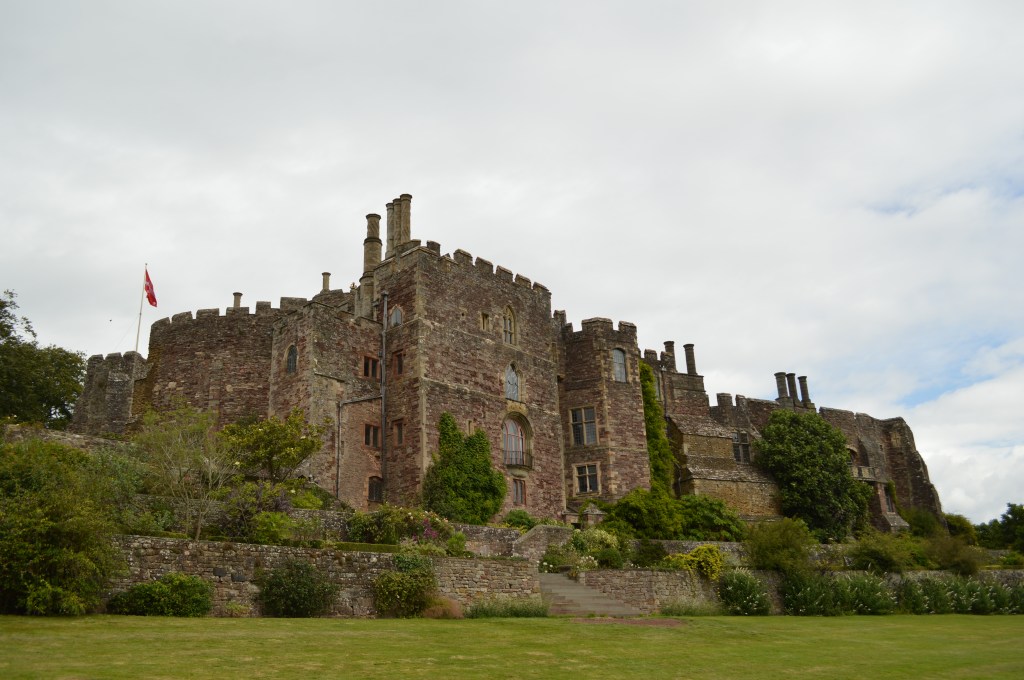
The younger Ralph Fitz Stephen (?-1202) was probably born in the 1120s. He was my 26 x great grandfather and married into the de Berkeley family of Berkeley Castle, Gloucestershire, and later, Maud or Matilda de Calz. Unfortunately we do not know the name of my 26 x great grandmother for certain.
The brothers Ralph and William were highly thought of by king Henry II. During the 1170s, they each held the position of High Sheriff of Gloucestershire, effectively the king’s representatives in the county, and of very high status. Ralph held this post from 1171 – 1175. In addition, he was the treasurer of the Abbey of Malmesbury, built in 1180, and was created baron of both Wapley and Winterbourne by Henry II. He also had land in Sherwood Forest, through his second wife, and seems to have been a benefactor of several abbeys around England. He would have been extremely wealthy. When the king died in 1189, Ralph was named in his will.
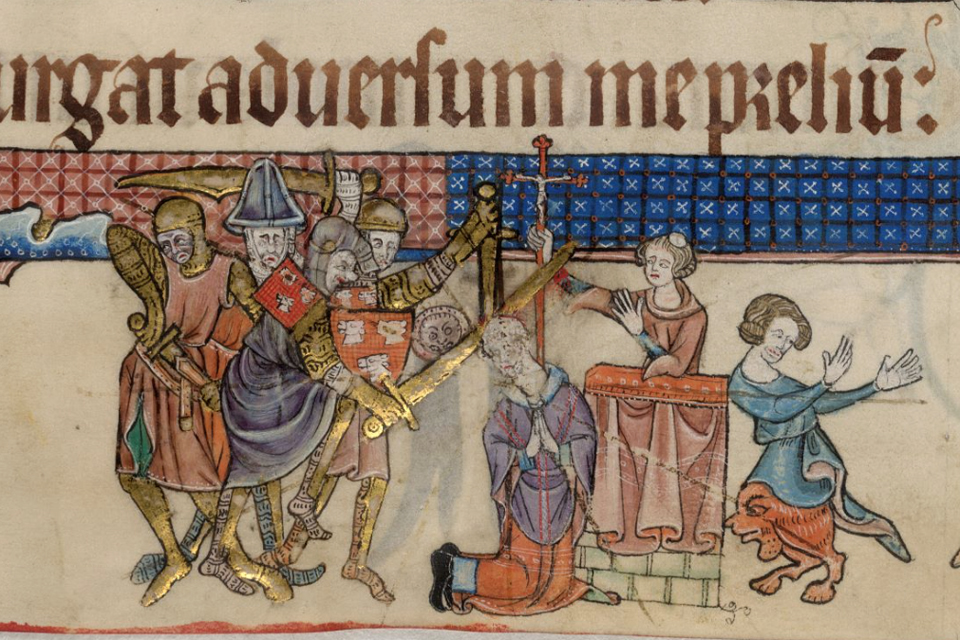
However, Ralph’s brother William Fitz Stephen (1124-1191) achieved the greater fame. He is considered by many to be the same William that secured a role as personal household clerk to Thomas Becket while he was Chancellor, and rose in prominence within the English church as his master did, becoming a subdeacon to Becket who was by then Archbishop of Canterbury. He was also a legal expert. William’s relationship with king Henry II meant that he was able to secure a pardon for himself when Becket was sent into exile for 6 years. William remained close to Becket however and spent time with him in France during the latter’s exile. Both men were restored to their positions, though Becket later angered the king again; William was an eye witness to the arrest attempt that led to the Archbishop’s murder in Canterbury Cathedral in 1170.
William was a literary man. His own pardon from Henry II had been secured by way of a long poem written in Latin. He is however most well known for writing a hugely important biography of his former master, the “Vita Sancti Thomae” or Life of St Thomas (1173/4), which describes Becket’s assassination in great detail. One historian, WH Hutton, said of William, “No biographer tells us more certainly what really happened and how it happened…”
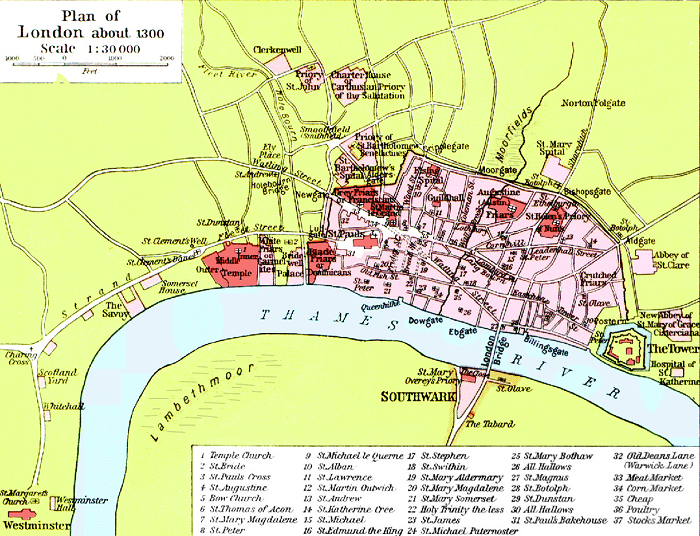
The preface of this book is famous in its own right due to its detailed and evocative description of twelfth century London and the lifestyle of its inhabitants.
Following Thomas Becket’s death, it appears that William returned to Gloucestershire where he worked with his brother, then Sheriff of Gloucestershire, before taking on the role himself in 1175. He appears to have served until 1190, whilst also acting as an itinerant justice across several counties under king Richard I (the Lionheart). He probably died around this time.
Ralph meanwhile married and had at least two sons, one of which, Fitz Ralph Fitz Stephens (?-?), our ancestor, took part in the Crusades to the Holy Land under Richard the Lionheart. Little is known about the next few generations of the family, though they remained in Gloucestershire and retained the baronetcy of Winterbourne. The “Fitz” part of the name was dropped in the fourteenth century, with John Stephens (?-?), my 20 x great grandfather. His grandson, another John Stephens (?-?), served as Mayor of Bristol in 1403, having previously been Member of Parliament for Bristol. John’s grandson, Thomas Stephens (?-?) (my 16 x great grandfather), was also an MP, serving at various points during the first half of the fifteenth century, including at the time of the capture of Joan of Arc. His son, and our ancestor, John Stephens (1459-1500), was involved in the War of the Roses and served as MP for Bristol under the new Tudor king, Henry VII.
Sources
Some Descendants of the Fitz Stephen Family in England and New England, Charles Ellis Stephens, 1905
Oxford Dictionary of National Biography
A New History of Gloucestershire, Samuel Rudder, 1779
https://bransoncook.systemaxonline.com/gedcoms/fitzstephens/pafg04.htm#38568
https://en.wikipedia.org/wiki/Ralph_fitzStephen
https://plantagenetdynasty.blogspot.com/2008/01/will-of-henry-ii-of-england.html
https://medievalsourcesbibliography.org/authors.php?id=343
https://thebecketstory.org.uk/timeline
http://users.trytel.com/~tristan/towns/florilegium/introduction/intro01.html
 Butland Gooding Family Tree
